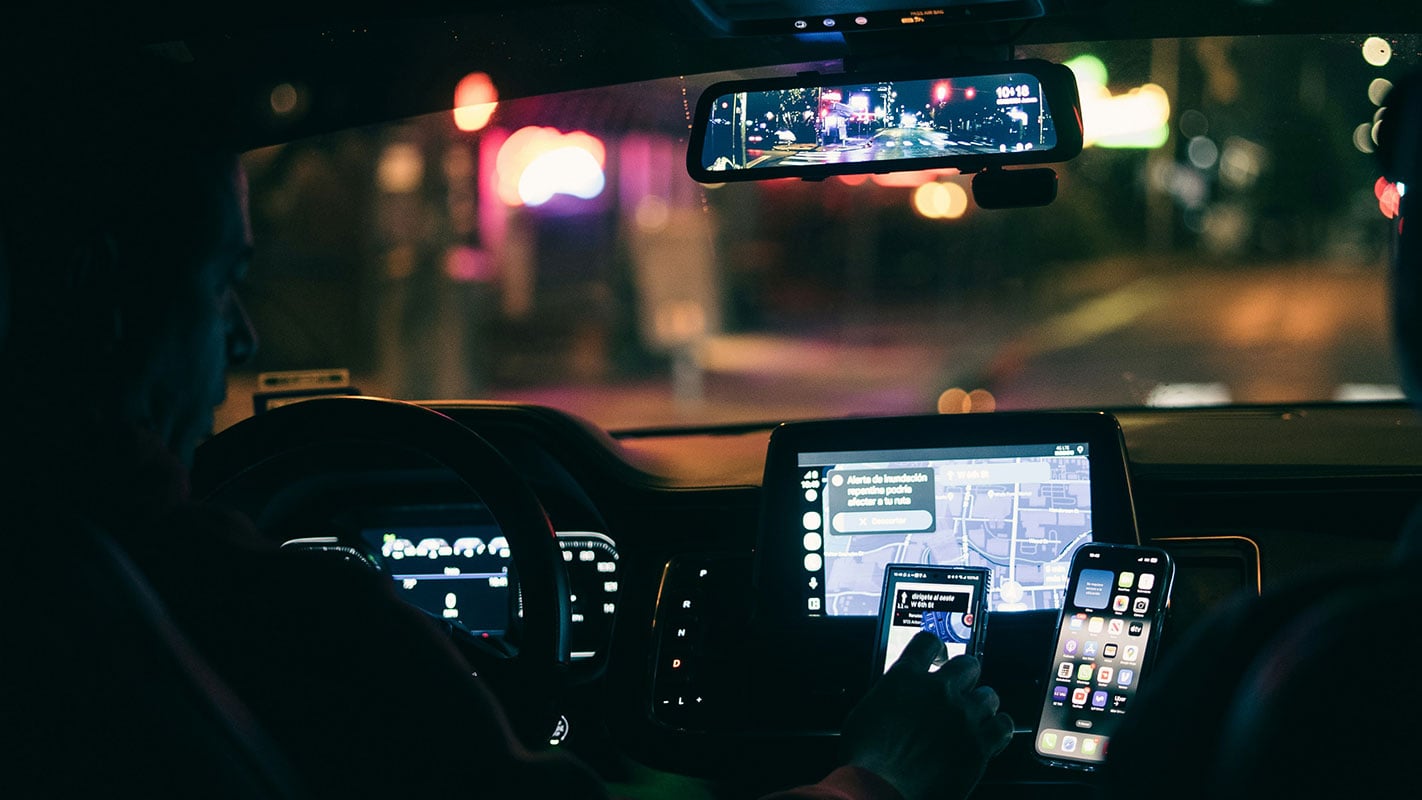
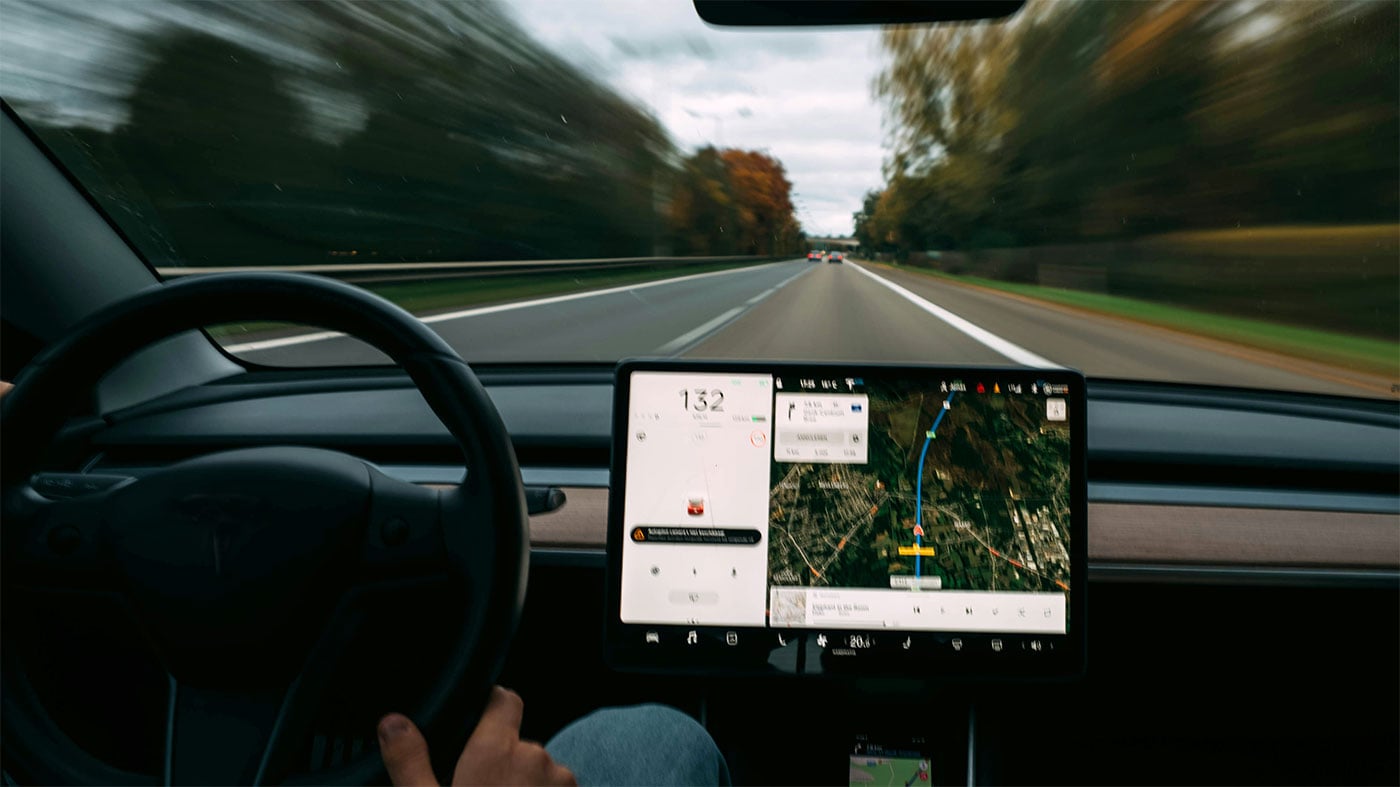
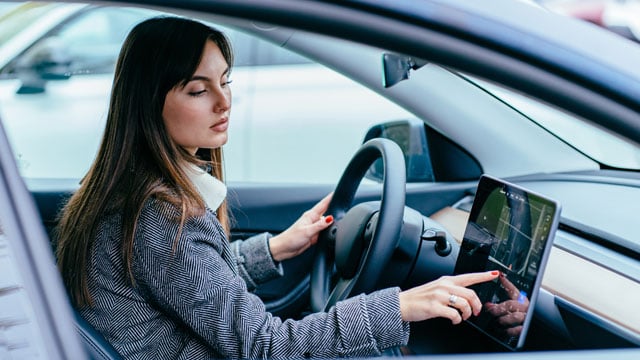
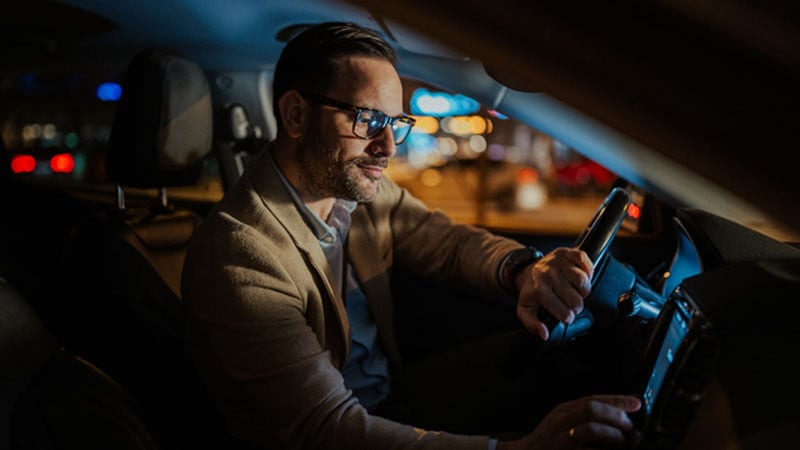
Distraction in the digital car is not a problem any one party can fix alone. It is designed into cockpits, permitted by rules that never quite defined it and acted out by drivers every day. Allianz sees three fronts that must move together to address distraction.

Swipe. Tap. Crash.
Driver distraction in the digital car
Driver distraction in the digital car
A report from the Allianz Center for Technology (AZT) for the Allianz Motor Day 2026
International Mobility Summit 2026
International Mobility Summit 2026
Chapter 5
A three-part call to act: safer, not just smarter
#1 Manufacturers: design cockpits around the reality of driving
Safety-critical functions — wipers, indicators, headlights, hazard lights, demisting — must be quick and intuitive to reach, whether as a physical button or a clearly defined, haptic touch area a driver can find without looking. This is not screens versus buttons. It is the right control in the right place, and it means being deliberate about which functions belong on a display and which do not.
The direction of travel is encouraging. From 2026, Euro NCAP rewards cars that keep core functions as physical controls or immediate one-touch buttons rather than burying them in menus. Manufacturers are responding: a large German OEM will bring back volume, heating, fan speed and hazard lights as real buttons below the screen from its next generation; a famed Italian brand is rebalancing digital and physical controls; and if anyone knows the value of a second of attention, it is the maker of a car that reaches 300 kilometers an hour. Placing controls where drivers expect them cuts the search time and makes it easier to move between cars. It is a step forward, not back.
#2 Regulators and enforcement: measure the risk, then manage it
A risk that is not measured cannot be managed. The single most useful step regulators can take is to make the recording of distraction consistent — giving police the means and the mandate to capture it, so that official statistics better reflect the true scale of distraction-related crashes. Allianz supports the recommendations of the 64th German Traffic Court Conference (Verkehrsgerichtstag) in Goslar this January. It called for a nationwide legal basis for automated, AI-assisted monitoring of handheld phone use at the wheel, tougher penalties and a precise legal definition of the “brief glance” that Section 23 of the Road Traffic Act permits but never defines.
Technology in the car is also being enlisted, but here the gap is timing. Since July 2026, new cars on the European market must carry a driver-distraction warning system that watches the driver's attention and warns when their eyes leave the road for too long. That is genuine progress.
However, there is room to go further. These warning thresholds may allow a driver's gaze to remain away from the road for substantially longer than the glance durations the scientific literature associates with increased crash risk—requiring warnings no later than 3.5 seconds above 50 kilometers an hour, and up to six seconds at lower speeds. Earlier, situation-sensitive intervention could therefore provide additional safety benefits.

Matthias Trüstedt
Head of Global Property & Casualty, Allianz SE
"Driver distraction is not only a road safety issue — it is also an important concern for insurers. Understanding how distraction contributes to accidents is essential for improving prevention and assessing risks. As vehicles become increasingly automated, reliable vehicle data will also play a growing role in understanding how accidents occur and determining responsibility."
#3 Drivers: attention cannot be delegated
Drivers are the final decision-makers, and they know it: across the nine markets a median of 86 percent — 87 percent in Germany — say cutting distraction is first and foremost their own responsibility. The task is to make that conviction match behavior. Why is glancing at a phone at speed still socially tolerated in a way that drink-driving no longer is? Several taps on a screen while moving are no different in their effect. Allianz calls for sustained public-awareness campaigns that treat screen distraction and phone use as seriously as alcohol, backed by driver education and clearer in-car warnings, so that setting the phone and the touchscreen aside becomes second nature. Technology can support attention. It can never replace it.
The future of mobility will be digital, connected and increasingly automated, and that holds real promise for safety. But technology must serve the driver rather than compete for attention. A single test should judge every control: does it help the driver stay in control, and keep everyone around them safe? As cars grow more digital, interface design is no longer a question of style. For the controls that keep people safe, design must follow function — and mobility's next chapter must be not only smarter, but safer.