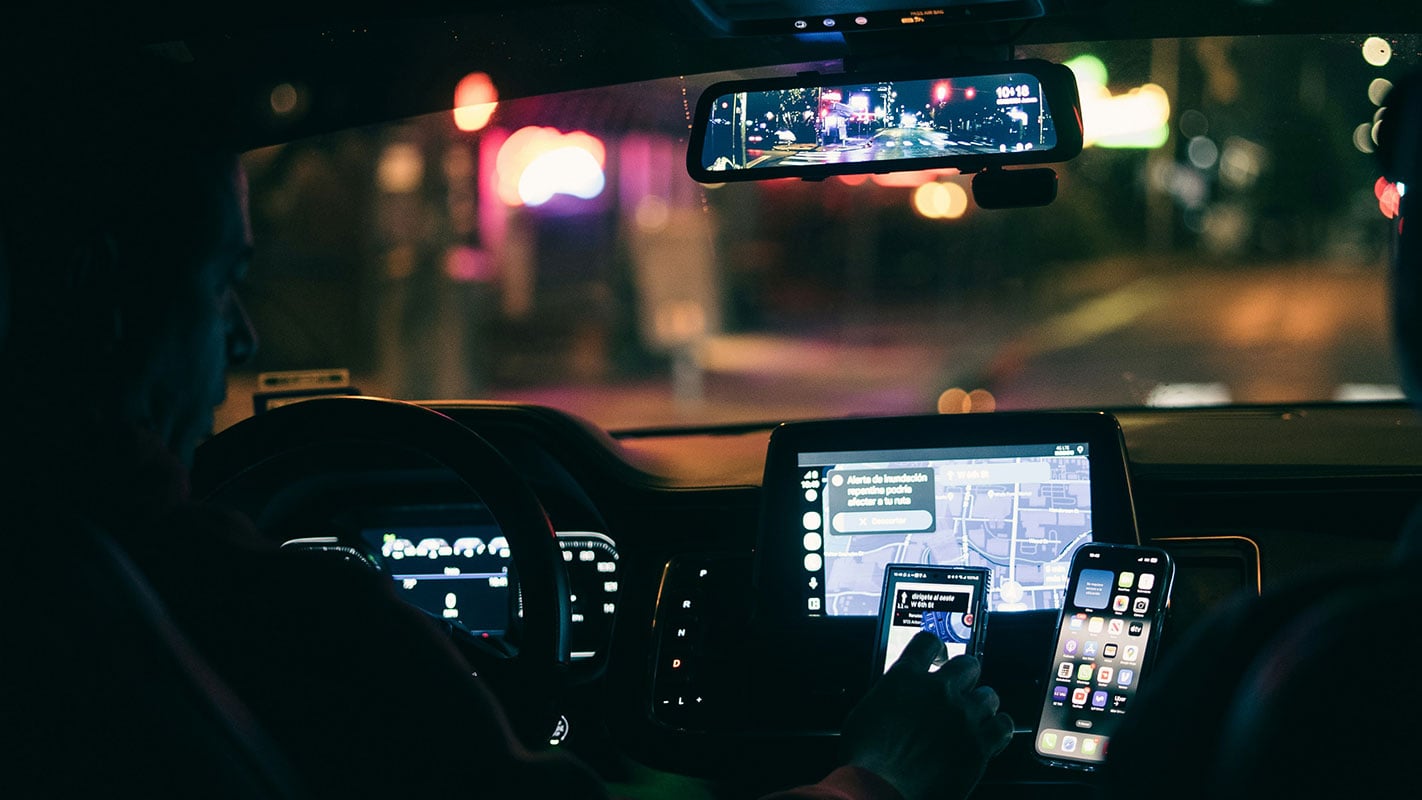
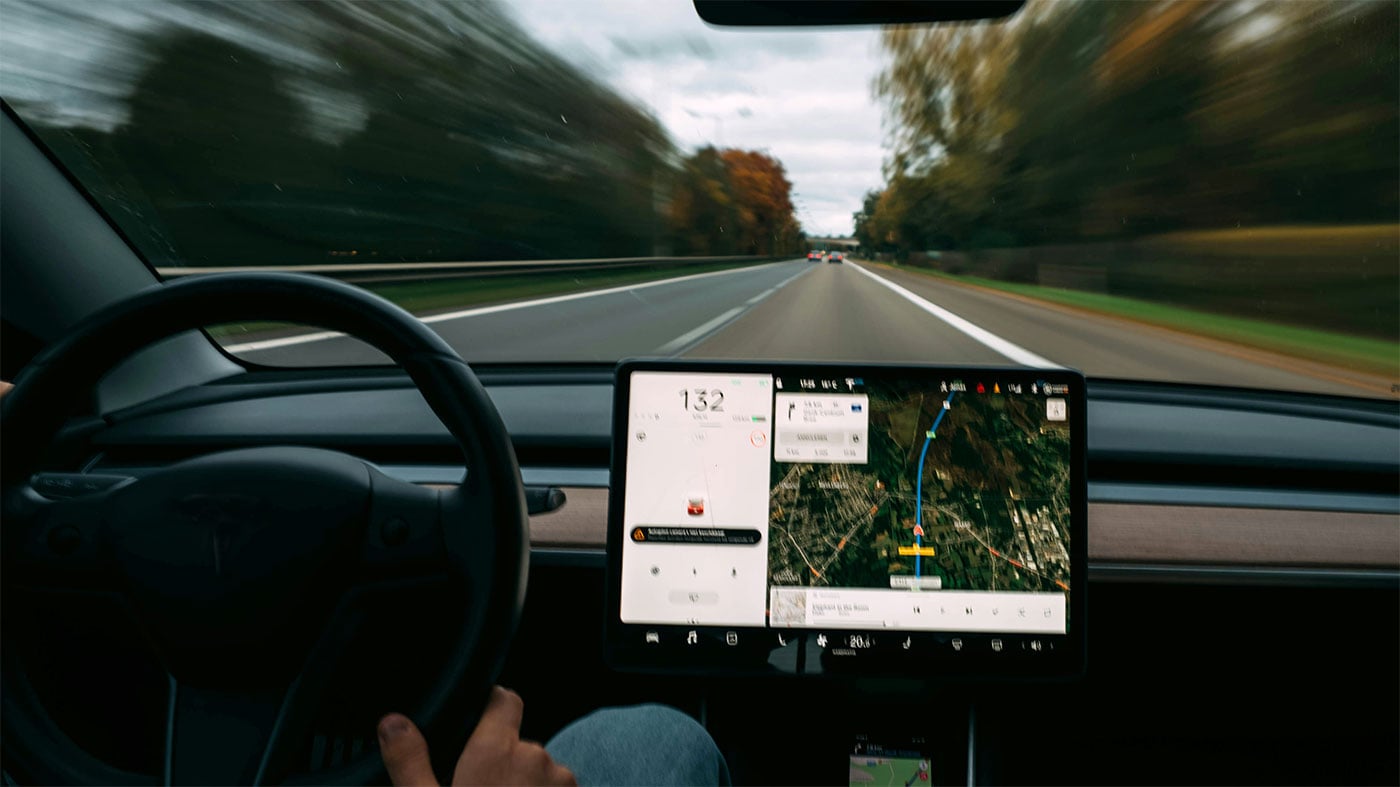
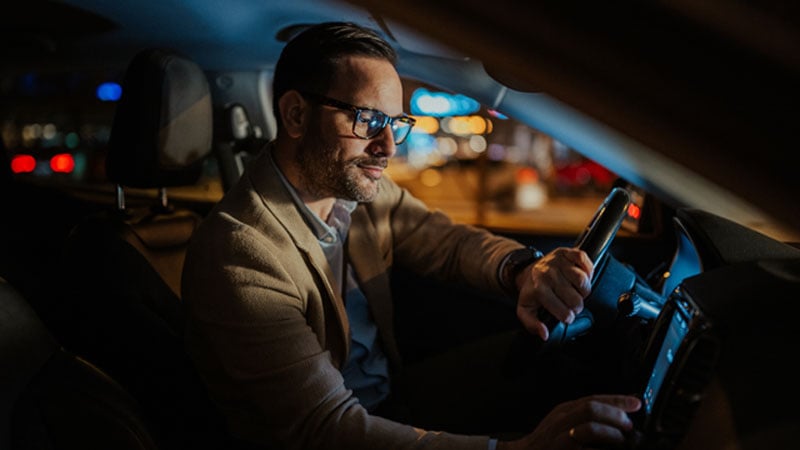
To set the research against the public's own experience, Allianz surveyed drivers across seven markets in Europe plus Australia and Brazil, with around 1,200 respondents per country. The picture that emerges is consistent: drivers feel the pull of in-car screens, and they increasingly want controls they can use without looking. They are surprisingly willing to accept responsibility themselves.

Swipe. Tap. Crash.
Driver distraction in the digital car
Driver distraction in the digital car
A report from the Allianz Center for Technology (AZT) for the Allianz Motor Day 2026
International Mobility Summit 2026
International Mobility Summit 2026
Chapter 3
The international survey: what drivers say
Distraction is felt, and it is getting worse
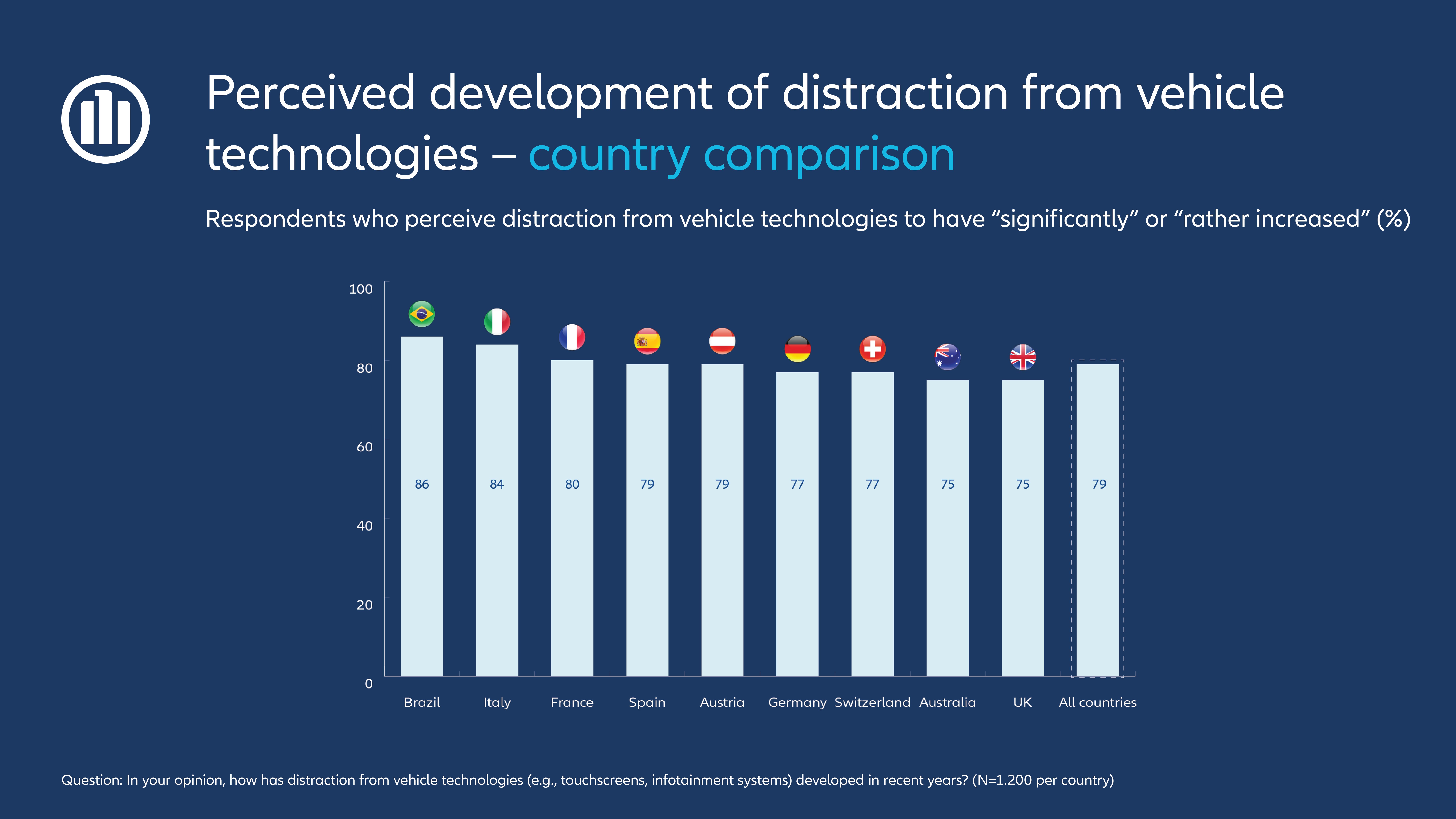
Drivers do not think distraction is a marginal issue, but nor do they treat it with the seriousness the evidence warrants. Across the surveyed countries, 79 percent believe in-car technology has made distraction worse in recent years; in Germany, the figure is 77 percent. Yet only 53 percent rate the general risk of distraction as high or very high. That gap — between a problem people acknowledge and a risk they underrate — is where much of the danger lies.
Experience backs the perception. For example, 19 percent of German respondents say they caused or partly caused a crash in the past three years. Across the nine markets surveyed, a median of 18 percent report the same, from 12 percent in France to 26 percent in Brazil. Of those, 73 percent say distraction definitely or possibly played a part, with about a third saying it definitely did. What the crash record struggles to prove, drivers themselves readily admit.
The touchscreen is a recurring culprit
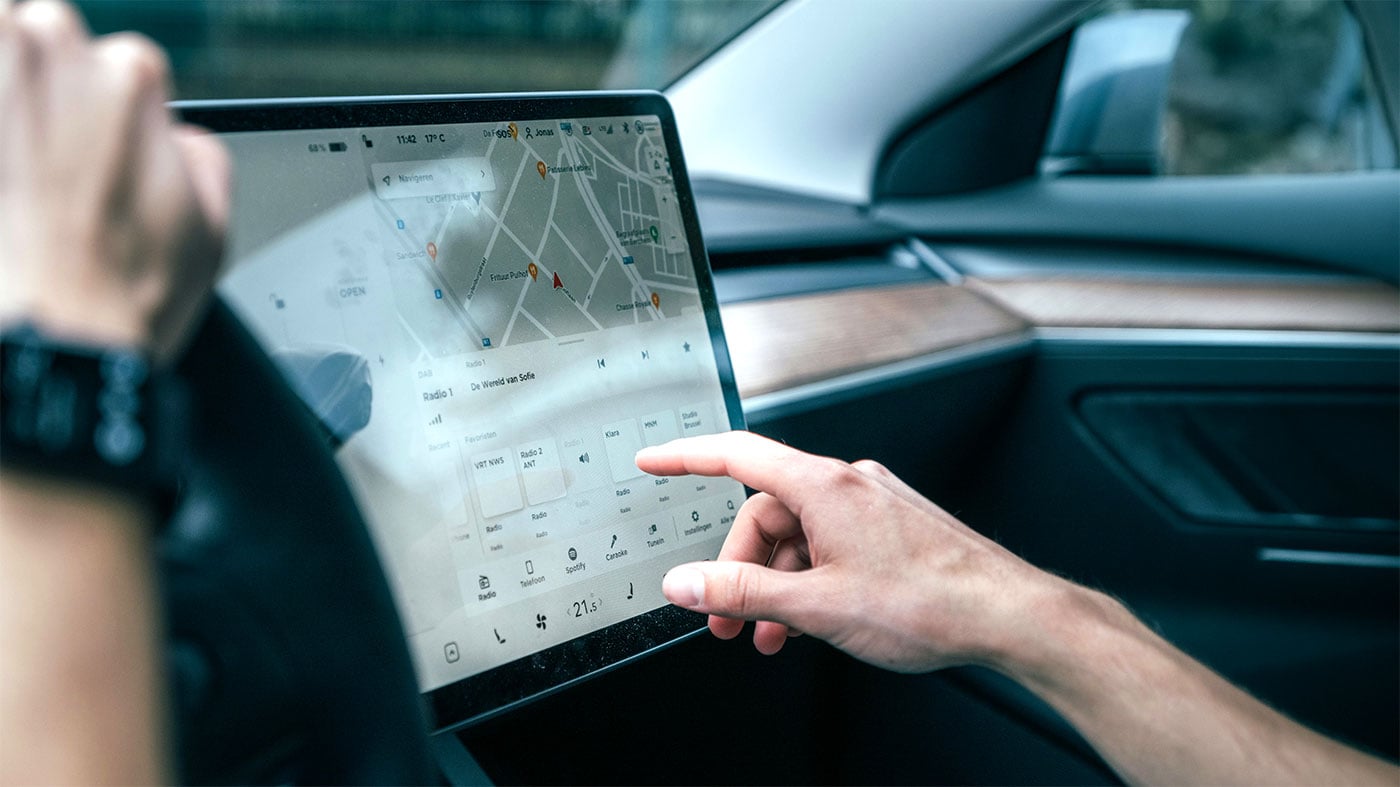
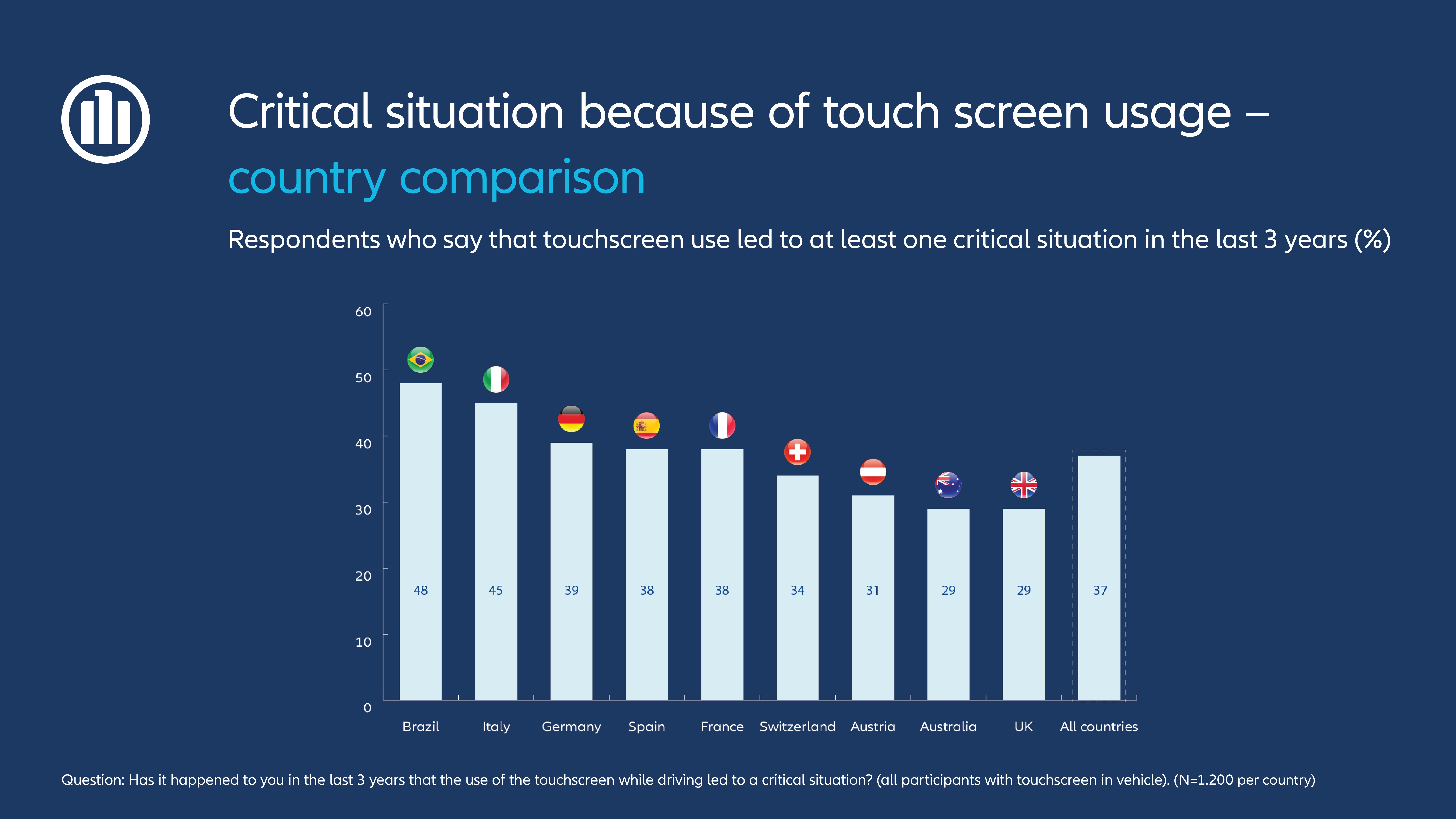
In Germany, 39 percent of drivers report at least one critical situation — a heavy brake, a near miss, a collision — while operating a touchscreen in the past three years. Across the nine markets, the median is 37 percent, from 29 percent in Australia and the UK to 48 percent in Brazil. Depending on the task, between 24 and 34 percent say using the screen strongly impaired their control of the car. Drivers are specific about what makes it worse: long scrolling through lists (48 percent), confusing or complex menus (46 percent) and small or hard-to-hit touch areas (40 percent) top the list.
Their preferred remedy is not to remove screens but to bring back the controls that never needed one. In Germany, 70 percent would rather operate safety-critical functions through classic buttons and dials than through the touchscreen alone — the highest of the nine markets, where the median is 65 percent and support runs no lower than 56 percent in Brazil. This is not only nostalgia among older drivers: support runs high among 18-to-25-year-olds, with a median of 72 percent across the nine markets, ranging from 61 percent in Brazil to 82 percent in France. The people most familiar with screens are among the clearest that some tasks do not belong on them.

The phone has not gone away
For all the focus on built-in screens, the handheld phone remains a severe problem. In Germany, 42 percent of drivers admit to texting on a handheld phone at least occasionally while driving, and the share rises among younger drivers. Some 27 percent report a critical situation caused by handheld use in the past three years — a share that climbs to 66 percent among the heaviest users. The built-in and brought-in distractions do not replace each other. They stack.
Drivers accept responsibility — and want help
Perhaps the most encouraging finding is one of attitude. Across the nine markets, a median of 86 percent of drivers say reducing distraction is first and foremost their own responsibility. That does not mean they want to be left alone with it: a median of 59 percent would support higher fines and 38 percent would back technical limits on complex controls while the car is moving. In Germany the numbers run a little higher, at 60 percent for higher fines, 48 percent for tougher sanctions and 41 percent for limits on complex controls. Drivers are not asking to be absolved. They are asking for controls they can use without looking, and for rules that make the safe choice the easy one.

Michael Praxenthaler
Traffic Psychologist, Allianz Center for Technology (AZT)
"Not all touchscreens are equally distracting. Our research shows that well-designed in-car controls can significantly reduce the time drivers spend looking away from the road. This demonstrates that distraction is not simply a driver problem - it is also a design challenge."