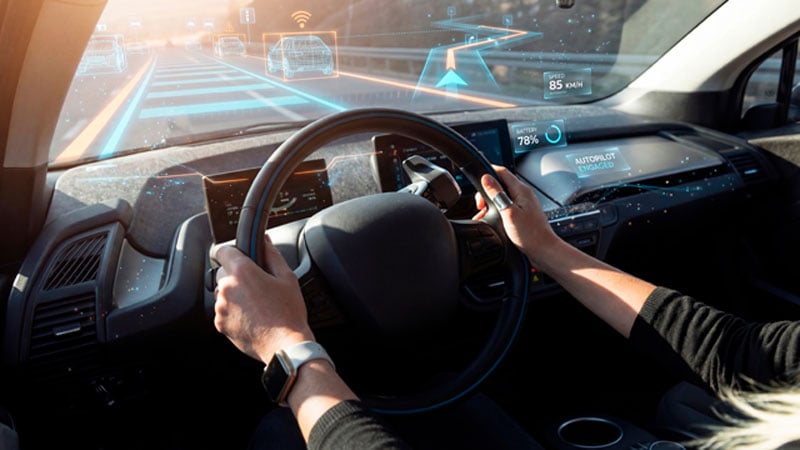
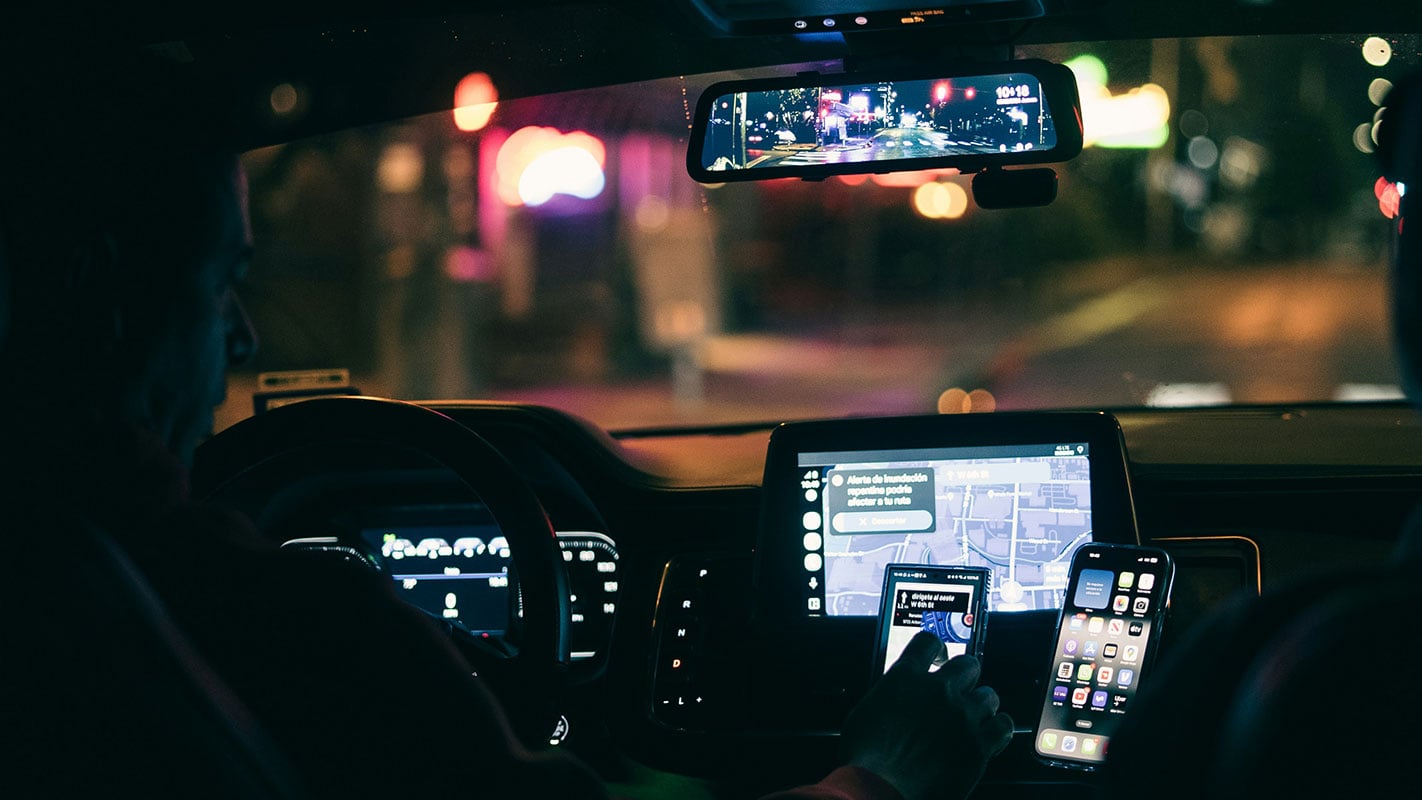
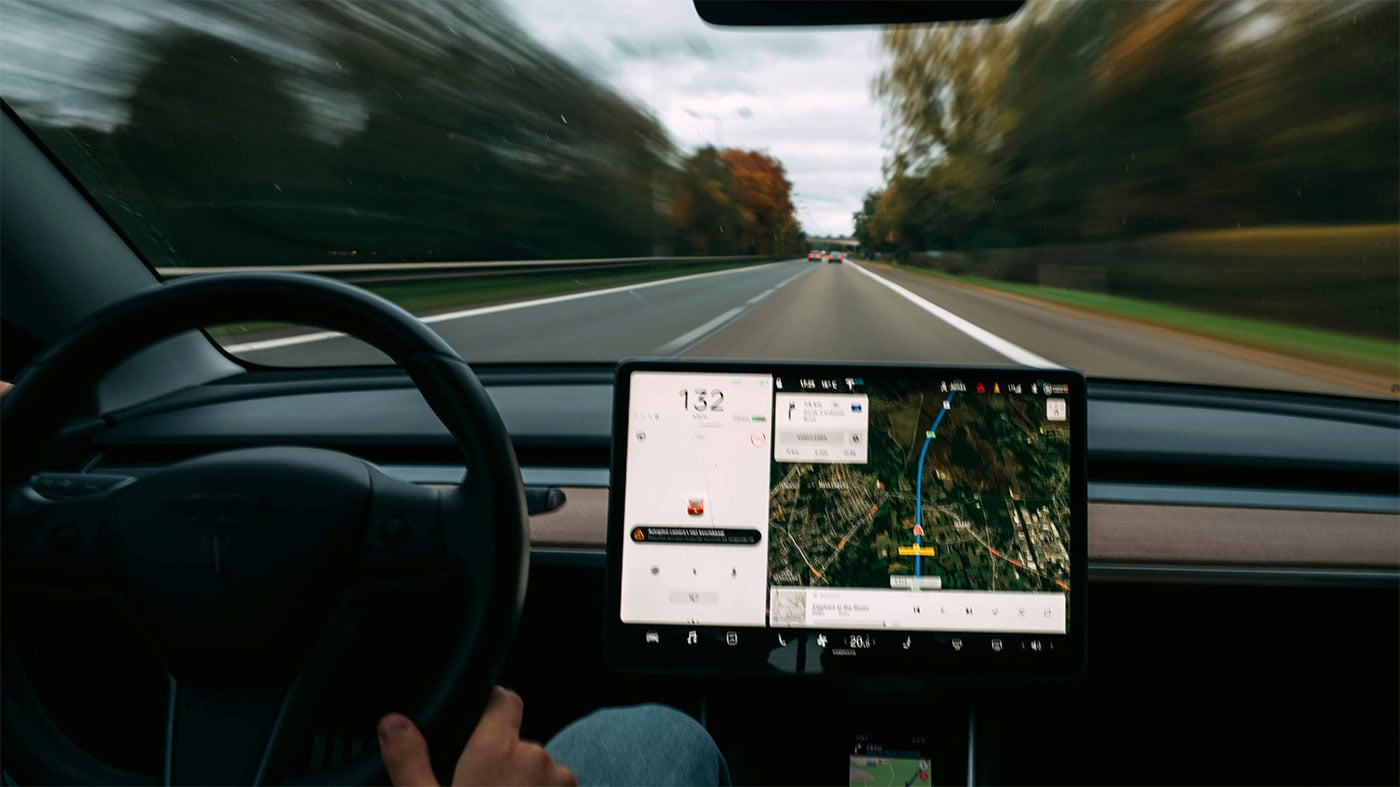
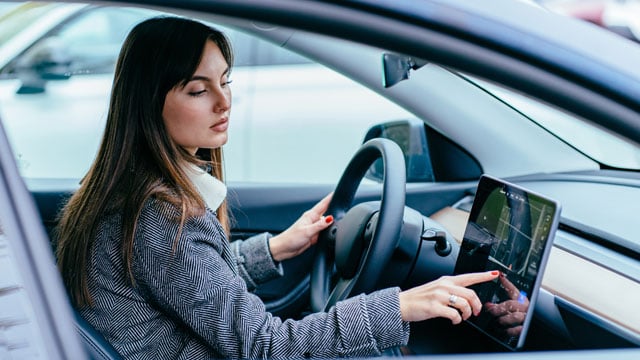
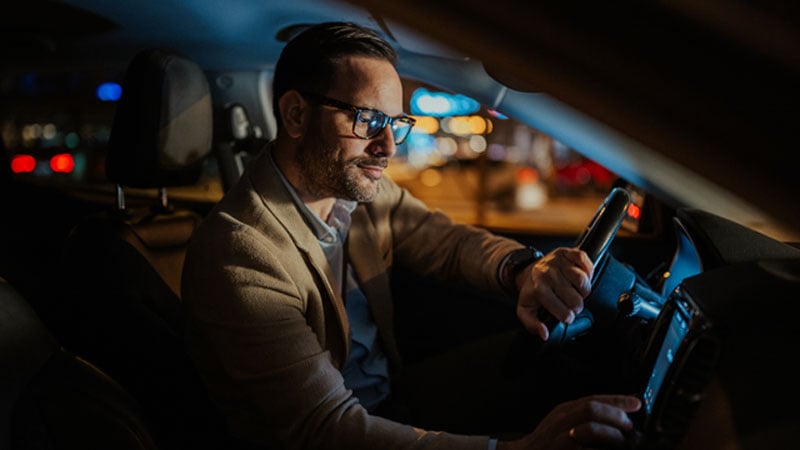
In many new cars, the touchscreen is unmissable. Displays now dominate the cabin, and many of the physical controls drivers once relied on have been replaced by touch surfaces or moved somewhere less obvious. The change has been quick, and we are only now measuring its consequences for attention.

Swipe. Tap. Crash.
Driver distraction in the digital car
Driver distraction in the digital car
A report from the Allianz Center for Technology (AZT) for the Allianz Motor Day 2026
International Mobility Summit 2026
International Mobility Summit 2026
Chapter 1
The digital cockpit: how screens changed driving
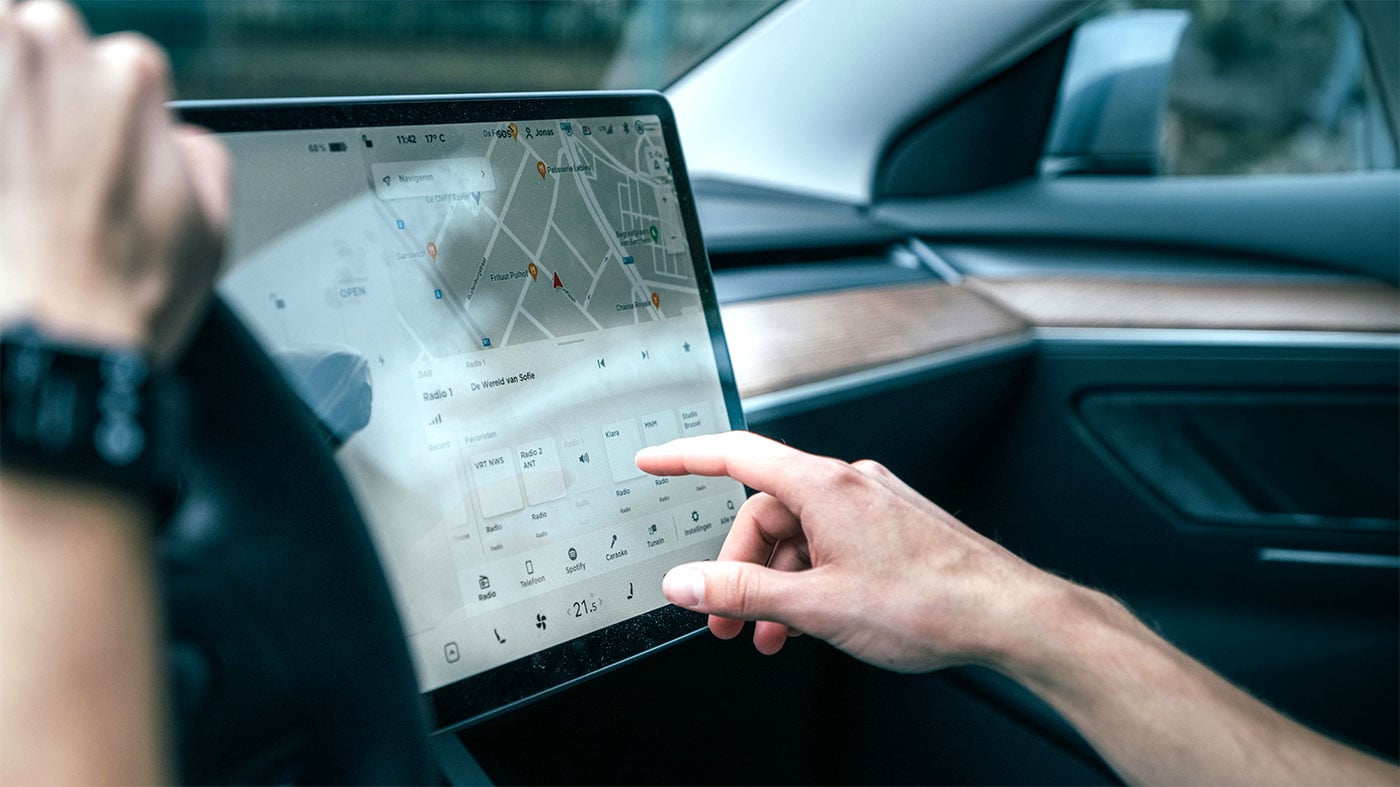
The move to screens is not, in itself, a problem. Displays make some things safer and easier: a clear map, a sharp reversing camera, a warning that stands out. The difficulty is that the same surface is now asked to do everything, including tasks once handled without a glance. Setting the temperature, choosing a wiper speed or turning on the hazard lights are jobs a driver could once do by feel with their eyes still on the road. Route them through a menu, and the driver must look, find and tap — sometimes more than once.
Two shifts are worth separating. The first is substitution: familiar physical controls have been replaced by touch surfaces or relocated to less intuitive positions. The second is migration: functions once operable by feel are increasingly pulled into the central screen, with climate control the clearest case. Neither shift is about the screen as such. Both reflect a lack of clear thinking about which functions belong on a display, and which must stay fixed, immediate and physical.
The AZT's own record shows how interaction has crept upward. Changing a radio station in a typical mid-range family car took two steps and a two-to-three-second glance in the mid-2000s. In a comparable model today, the same task runs to four steps and can hold the eyes for five to ten seconds. Small increments, repeated across dozens of daily interactions, add up to a notable change in how much time drivers spend looking away from the road.
The older distractions have also not gone anywhere. Cigarettes, food, phones and children in the back seat still compete for attention exactly as they did a decade ago. What is new is that the car itself has joined them. The cockpit has become a screen that competes with the road for attention — and unlike a phone, it cannot simply be put in a pocket.
Forty meters with your eyes shut
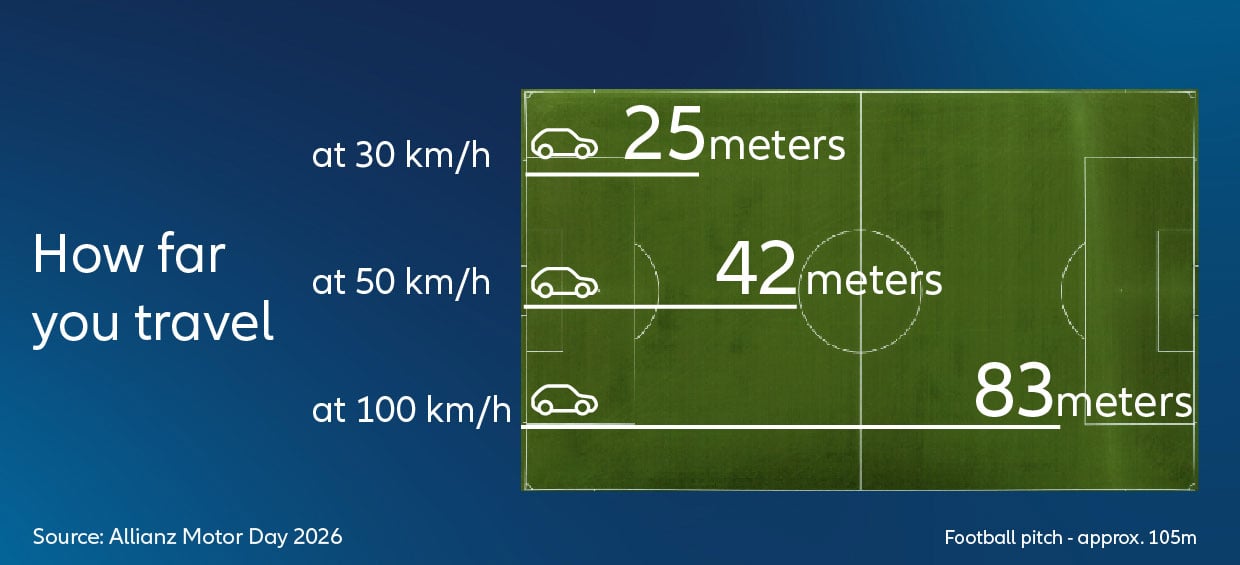
The arithmetic is unforgiving. At 50 kilometers an hour, a car covers almost 14 meters every second. Three seconds spent looking at a display — a routine length of time to enter a destination or find a song in a list — means more than 40 meters traveled without watching the road. That is enough distance to miss braking traffic ahead, a cyclist moving into the lane or a child stepping onto the road. The danger is not that the driver never looks up. It is that the road does not wait while they look down.