
.jpeg)



Last updated: September 23, 2026

Resilience starts before the storm: Year one of Humanity Insured
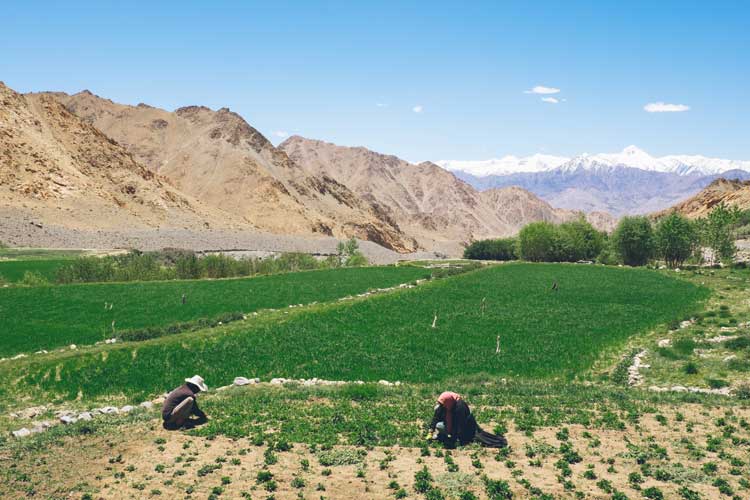
Insurance is often seen as something that happens after an unforeseen event: there is a claim, a payout and a recovery cheque arrives. But for people living on the economic edge, it can be the difference between stability and poverty. A failed harvest, a flood that wipes out stock or a storm that shuts down informal work can erase savings overnight and push families into debt.
When that happens, the question is not only if aid arrives, but whether it arrives on time. There is insurance for precisely such cases: providing support that is agreed in advance, so an event does not become a long-term setback. At stake is the safety net that allows people to recover quickly and stay in control of their choices.
That is the premise behind Allianz’ partnership with Humanity Insured, an international charity established to make insurance accessible to people exposed to climate-related disasters, but who are often priced out of traditional coverage.
One year into the partnership, Humanity Insured’s first Learning Report provides early evidence that the approach to subsidizing climate cover through transparent, pre-agreed triggers delivers measurable impact and builds trust with communities. One key takeaway from the report: Trusted insurance builds agency and changes behavior, enabling proactive resilience.
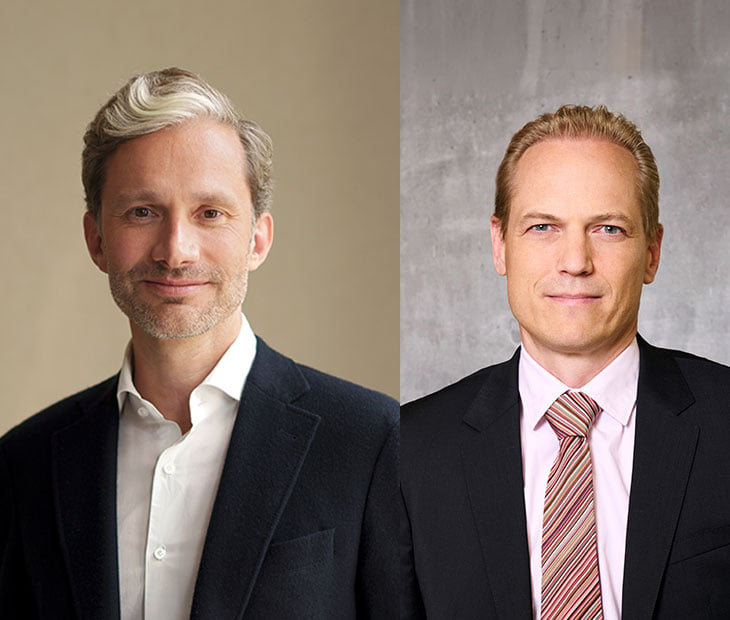
“The first-year review was deliberately practical: not ‘we launched,’ but ‘did it work’,” says Charlie Langdale, CEO of Humanity Insured. “The Learning Report shows what’s working, highlights the lessons we’ve learned so far, and helps us understand where the model needs to be strengthened. This learning is essential to scale responsibly.”
When a bad season becomes a crisis
“Protection gap” describes the difference between the risks people face and the protection they can rely on. In 2025, natural disasters caused approximately US $224 billion in global losses, with US $108 billion insured — illustrating how wide this gap remains. The term can sound technical, but for vulnerable households — including those exposed to climate-related shocks — it comes down to one question: does help arrive when it is needed?
Without a dependable safety net, a bad season can become a crisis. People sell livestock or tools, take on debt, skip meals or pull children out of school just to get through. Over time, that uncertainty makes it harder to plan, invest or recover. Closing the protection gap means putting support in place before the event occurs— that includes reserved funding that can reach people quickly when volatility and unpredictability arise.
Humanity Insured starts from the idea that resilience cannot be built solely at the moment of loss. It must include prevention, preparedness and recovery, with a clear line of sight to what changes in real life for participating households. That includes better risk understanding among partners and communities, stronger local capability to deliver and manage protection, and solutions designed for long-term uptake rather than one-off pilots.
It also focuses on lived outcomes for families — whether they can keep food on the table, avoid debt traps and keep children in school when shocks hit.
“A one-year review is not a victory lap. It is a reality check,” says Gabrielle Durisch, Chief Sustainability Officer at Allianz Commercial. “The report confirms that subsidized, transparent protection can reach people quickly when climate-related disasters hit — and it highlights what needs improvement next, from clearer communication of cover to tapering subsidies and strengthening local ownership.”
What the first year has delivered
Humanity Insured’s Learning Report 2025 shows what happens when premium support is used as a catalyst. With GBP 1.67 million – 73% of the overall grant funding in 2025 – directed to premiums, Humanity Insured helped make GBP 33.5 million of protection available across 14 projects in 14 countries — reaching 1.69 million people, with 59% of direct beneficiaries being women.
In this partnership, Allianz is a Founding Donor, contributing funds and expertise alongside other partners to subsidize premiums and help make protection cover available through insurers. In this context, “protection” means the amount of cover put in place in advance. This does not mean cash being handed out upfront. Rather, it enables cover to exist in advance, with payouts triggered automatically when transparent thresholds are met, so support can move fast when conditions deteriorate.
Humanity Insured is a partnership-led approach to resilience, built around collaboration with organizations that have strong community reach and on-the-ground capability. The goal is to connect those capabilities with insurance and risk expertise in a way that can be scaled and remains grounded in community needs.
In Syria, a policy funded by Humanity Insured, within a wider public-private partnership involving the Global Shield Financing Facility, World Food Programme (WFP) and support from Allianz, demonstrated how community‑led, pre‑agreed protection works in real-world conditions. After one of the country’s worst droughts in half a century, a parametric drought policy was triggered in June 2025 using satellite-monitored rainfall and vegetation data.
Because the trigger and payout process were agreed in advance, the policy released a USD 7.9 million payout (about GBP 5.84 million), coordinated by WFP, enabling rapid assistance for nearly 120,000 people in critical agricultural areas, including food support and essential supplies. In a context shaped by conflict, fragile livelihoods and deepening food insecurity, that predictability and clarity matters.
The Syria payout showed how pre-arranged finance tied to transparent indices can move faster than traditional post-crisis funding — helping to prevent a climate change disaster becoming a longer-term livelihood crisis. Speed matters, but so does legitimacy: for protection to last, people need to understand it, trust it, and have a pathway to make it their own.
Building resilience through protection (Learning Report 2025)
- Premium support can open the door, but it is designed to be catalytic. Subsidies help make cover affordable and get programs started, but they need a clear plan for how costs will be shared over time, so communities can move toward more sustainable models.
- Clear, pre-agreed triggers can get help quickly. When the rules are set in advance, money can be released fast — in some cases within 30 days — including before a crisis reaches its worst point.
- Impact is more than payouts. Fast payments matter, but the bigger test is what changes afterwards: whether families avoid debt, protect savings and recover sooner. Humanity Insured is working on shared ways to track these real-life outcomes, not just claims.
- Trust and understanding determine whether protection lasts. If people do not understand what they are paying for — or have had bad experiences in the past — they will not take it up. That is why programs emphasize plain-language communication, learning from peers and transparent payouts, often linked to familiar services such as savings or credit.
Building trust beyond the payout
The first Learning Report also points to early signs that this protection is being built in ways people can trust. Some 64% of grants were shaped through direct community engagement, and 43% include contributions from community members. That matters because, as the Learning Report shows, insurance only works when it is understood, trusted and chosen - not imposed from the outside
Humanity Insured is currently testing nine mechanisms across seven climate risks, from droughts to extreme heat. So far, the portfolio has delivered GBP 6.7 million in payouts. Notably, in 2025, the majority of funding* was directed towards premiums, giving partners the kind of hard to secure support that makes community led risk finance most effective. A further 11% was invested in resilience measures that help vulnerable communities better withstand climate volatility.
The model is designed to avoid short-term fixes. Programs are co-designed with communities, measured beyond claims using indicators of a “resilience dividend” such as income stability, assets protected, children kept in school, health costs avoided, businesses started and climate-smart practices adopted. It is also built with a pathway to reduce reliance on donor subsidy over time, including gradual increases in local involvement and contributions, and the mobilization of other longer-term premium funders, where feasible.
What comes next
The next phase for Humanity Insured is to scale responsibly - keeping solutions locally relevant, strengthening accountability, and ensuring protection remains effective as climate risks intensify.
For Allianz, the long-term direction is clear: resilience must be practical and inclusive if it is to hold in a world of increasing risk.
“Year one is about understanding what works in real conditions — and being honest about what needs to improve,” Durisch says. “This first year was about practical signals on design and delivery – helping Allianz identify where we can offer additional support, for example in areas where our risk expertise can strengthen implementation.”
Ultimately, the intention of the review is not to judge frameworks but to test whether support is working in the ways that matter most.
“Resilience is not abstract. It is whether a family has tools to cope, whether a small business can reopen, whether a community can rebuild — and for people to have choice,” Langdale says.
Read Humanity Insured’s Learning Report 2025 and learn how Allianz supports resilience through partnership and knowledge sharing.
Further information
More news
About Allianz
The Allianz Group is one of the world’s leading insurers and asset managers, active in almost 70 countries and serving around 97 million private and corporate customers*. Our customers benefit from a broad range of personal and corporate insurance services, including property, life and health insurance, as well as assistance services, credit and global business insurance. Recognized for the seventh consecutive year as the number one global insurance brand in Interbrand’s Best Global Brands 2025 ranking, Allianz’s success is built on technology-enabled customer centricity – providing peace of mind, protection, and prevention for our customers and strengthening the resilience of individuals, communities, and societies. We are one of the world’s largest investors, managing around 791 billion euros** on behalf of our insurance customers. Furthermore, our asset managers PIMCO and Allianz Global Investors manage about 2.2 trillion euros** of third-party assets. Thanks to our systematic integration of environmental and social criteria in our business processes and investment decisions, Allianz received an MSCI ESG Rating of AAA (as of March 2026). In 2025, our 156,000 dedicated employees achieved a total business volume of 186.9 billion euros and an operating profit of 17.4 billion euros for our shareholders.
* As of December 31, 2025. Customer count reflects Allianz customers in consolidated entities that are part of the customer reporting scope only.
** As of June 30, 2026.
Cautionary note regarding forward-looking statements
As with all content published on this site, these statements are subject to our cautionary note regarding forward-looking statements: