



Last updated: September 23, 2026

Powering the future: How Allianz is investing in the electricity transition
Climate change is, at its core, an energy problem. To reach net-zero, societies need to electrify everything from heating and transport to heavy industry and then decarbonize the power itself. That means not only scaling up electricity generation via renewables, but also enhancing electricity transmission by upgrading aging grids, building new interconnectors, expanding storage and backing emerging technologies such as green hydrogen.
For long-term investors, this is both a necessity and an opportunity. Trillions of euros will be needed over the coming decades to modernize electricity infrastructure and integrate clean power into all parts of the economy. Allianz wants to help insure this transformation and invest in more resilient, low-carbon energy systems that generate attractive, stable returns for our customers and shareholders.
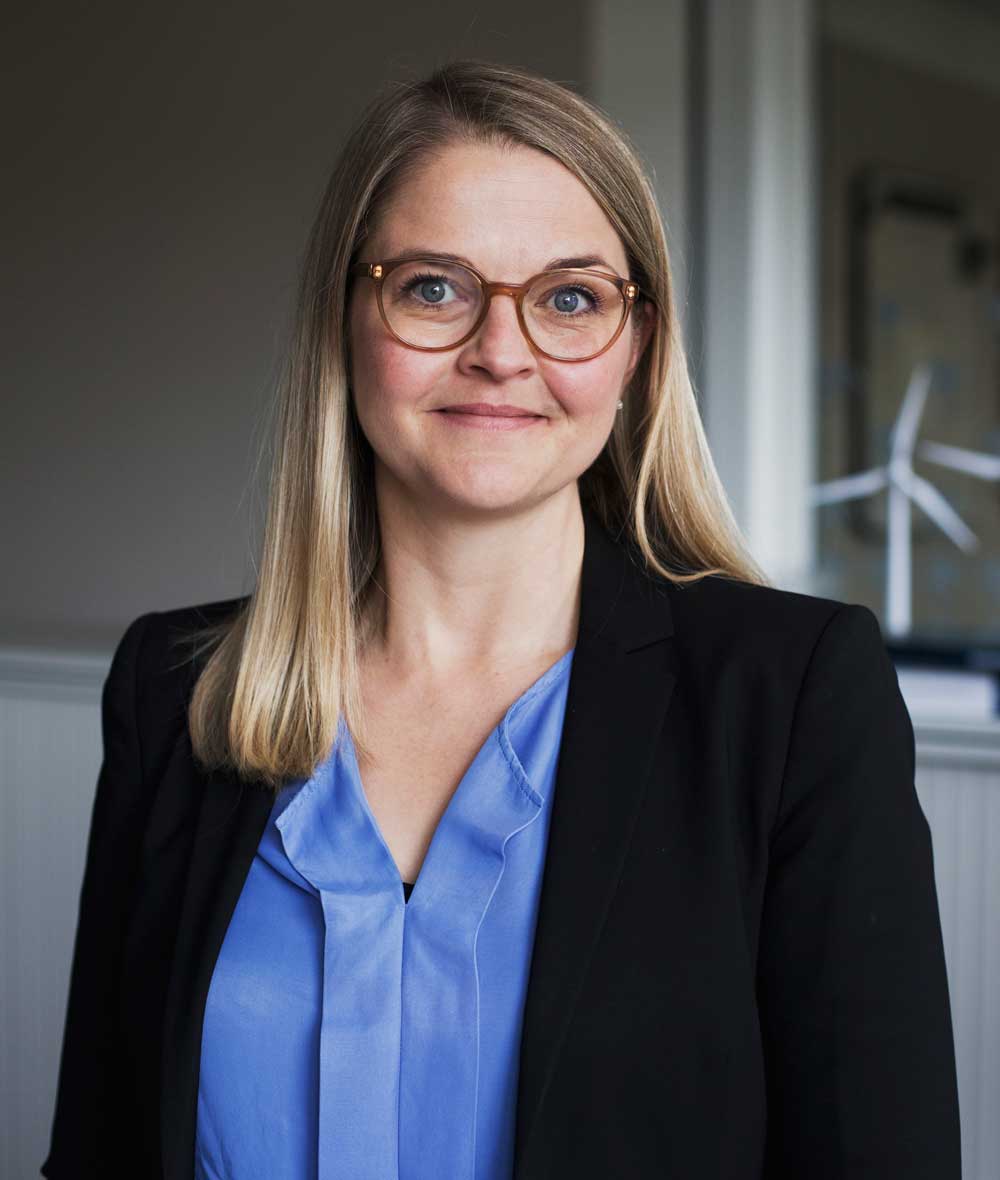
In this interview, Michelle Ruehl, Senior Investment Manager responsible for Renewable Energy at Allianz Investment Management (AIM), shares how Allianz is investing in the future of power and where she sees the biggest opportunities and challenges. A complementary interview with Anthony Vassallo and Adam Reed explores how Allianz Commercial works with clients to turn ambitious energy projects into robust, insurable assets.
How would you describe Allianz Investment Management's role in supporting the energy transition through its investments?
The energy transition isn't a side project for us — it's central to how we invest. From the outset, AIM has treated electrification and the build-out of clean power systems as a core investment theme, not a recent add-on. Allianz's journey began around 20 years ago with our direct renewables strategy, where we now manage roughly 3.3 gigawatts of installed capacity. Behind that progress is a team of specialists with deep experience across the electricity value chain — and a genuine passion for the sector — spanning generation, grids, interconnectors, storage and emerging technologies.
We see the energy transition as part of a broader decarbonization story. In addition to building more wind turbines or solar panels, it's about integrating those into the system and investing in new technologies that reduce emissions across the economy. That is why we aim to build a complementary strategy that combines generation with transmission and flexibility — including storage and grid-supporting assets — rather than treating each in isolation.
What makes electricity infrastructure a priority for AIM, and how does this connect to Allianz’ role as both insurer and long-term investor?
Electrification has been one of our main investment themes in recent years, and its importance will only grow. Green electricity is the backbone of decarbonization — from electric vehicles and heat pumps to green hydrogen.
Like many investors, we started with clean power generation, especially wind and solar. But we quickly learned that the transition also depends on transmission capacity, grid stability and storage at scale. In practice, that means not just backing generation assets, but also infrastructure that moves clean power and balances markets.
Allianz’s dual role is a real strength. As long-term investors, we can provide patient capital to scale proven technologies and help promising new technologies reach maturity. As an insurer, Allianz understands risk — technological, operational and regulatory — and that insight feeds directly into how we select, structure and monitor our investments.
How do you balance investments in proven energy technologies and those in emerging areas?
Our mandate allows us to invest across the risk spectrum — from venture capital to private equity and infrastructure — provided investments are wholly focused on decarbonization. We work selectively with internal and external asset managers, combining specialist capabilities with disciplined portfolio construction and governance.
We manage risk tightly. Because early-stage climate technologies are inherently higher-risk, we cap their share and partner with a small number of leading venture funds as long-term investors. As technologies move from pilots to scaled assets, risk typically falls as performance, repeatability and bankability improve — and as the ‘green premium’ narrows.
Most of the portfolio sits in proven, infrastructure-like assets, such as Allianz’s renewable energy portfolio of more than 100 wind farms and solar parks, where revenues and costs are more predictable and risk is well understood.
You're responsible for renewables at AIM, including battery energy storage. What makes battery energy storage particularly interesting from an investment perspective?
Battery energy storage is a good example of how an established technology can suddenly become very relevant. The core technology has been around for some time, but it only recently has become attractive as a standalone business at scale. One of the significant shifts over the past eighteen months has been a sharp drop in battery prices. That has made storage systems far more competitive and profitable, even when they are not bundled with other assets. Furthermore, the visibility on the route to market – that is, how the battery services are remunerated – has improved in several European markets. This supports a business case more suitable for a long-term investor.
We have closely followed the battery storage market for some years, at a time when the market was not yet investable for institutional investors, as we deliberately seek to build expertise. Allianz was one of the first institutional investors to join the German battery storage association (BVES) around three years ago. Today, this knowledge is paying off as we move into a broader roll-out across markets. We understand not only how the technology works, but also the different revenue models — from trading electricity on the market to earning fixed payments under so-called tolling agreements.
What are the main risks and value drivers in battery storage projects?
One of the most critical questions is how a project earns its money. Many batteries still rely heavily on ‘merchant’ revenues, meaning cash flows depend on short-term power price volatility that is hard to predict and may compress as more capacity comes online. If that exposure is too high, the project is harder to underwrite as infrastructure with stable, long-term returns. Grid access is the other key variable: interconnection queues, uncertain connection timelines and suboptimal siting can all affect whether the battery can connect and operate as planned.
The market is evolving. More projects now include tolling agreements, where a utility or trading company pays a fixed fee for use of the battery, securing a portion of revenues for several years and improving bankability for infrastructure investors. Even so, partner selection remains central: we prioritize developers and operators with proven track records, strong local market knowledge and the capability to manage technical and regulatory complexity.
That is why due diligence is central. For battery storage, we stress-test revenue models and downside scenarios, assess ESG characteristics and review the key commercial, operational, technical, legal and regulatory risks — including performance assumptions, degradation and safety. For technical topics such as fire risk, we draw on internal and external specialists and, where relevant, colleagues from Allianz Commercial to challenge assumptions before we invest.
Besides battery storage, which other emerging electricity-related technologies or concepts are on AIM's radar, and what do they have in common from an investment point of view?
Through our internal and external asset managers, we already have a range of businesses in our portfolio at different stages of maturity.
Grid stabilization and optimization technologies are one example. This can represent making existing infrastructure more efficient by reducing electricity demand, thereby smoothing respective peaks, reducing congestion through behind-the-meter and distributed energy solutions, or providing services that keep the power systems stable. An example for an investment in this space is NeuConnect, the interconnector between the UK and Germany. Assets like this illustrate our “system” approach: generation is essential, but so is the infrastructure that transports, balances and stores power.
Green hydrogen is another example. Although the roll-out is slower than many had hoped, we have exposure to some leading projects and still see green hydrogen as important for hard-to-abate sectors.
We are also exploring more cutting-edge concepts, such as industrial heat electrification and thermal energy storage, fusion, space-based solar power and artificial energy islands in the North Sea that could make offshore wind cheaper and more efficient. What these themes have in common is a clear link to decarbonization, a credible path to scale and, in time, the ability to generate stable, attractive returns once they reach a bankable stage.
How do these investments support Allianz's climate strategy and net-zero targets?
Allianz has set explicit targets for sustainable investments, and our decarbonization strategy supports those goals. But for us, the real question is impact, not just labels.
Many of our investments help build so-called ‘deep green’ products for clients, such as the Future-Focused Strategy of the Private Market Policy from Allianz Leben. To keep this credible, we work closely with our colleagues in Group Sustainability on methodologies, data, and reporting. It's essential that the contribution of each investment to decarbonization is measurable and that we're transparent about both progress and limitations, rather than relying solely on high-level commitments.
What does 3.3 gigawatts power?
Allianz's direct renewables strategy manages around 3.3 gigawatts of installed capacity – enough, at typical output levels, to supply about as much electricity in a year as a city like Munich consumes.
Why grids matter for long-term investors
According to the Allianz Research special report “Plug, baby, plug: Unlocking Europe’s electricity market,” Europe will need around EUR 2.3 trillion in grid and flexibility investment by 2050. For long-term investors, these assets can offer stable, infrastructure-style returns while enabling the large-scale integration of renewables.
The price effect of smart investment
Allianz Research finds that with sufficient grid expansion and flexibility, final electricity prices in the EU could be about 11% lower by 2035 and up to 30% lower by 2040 than on a business-as-usual path. That reinforces why Allianz Investment Management prioritizes technologies that improve system efficiency and resilience.
The opportunity behind electrification
Insights from the Allianz Green Transition Tracker 2025 point to massive investment needs in renewables and storage — creating long-term opportunities to deploy capital where it supports both decarbonization and stable returns.
Further information
More news
About Allianz
The Allianz Group is one of the world’s leading insurers and asset managers, active in almost 70 countries and serving around 97 million private and corporate customers*. Our customers benefit from a broad range of personal and corporate insurance services, including property, life and health insurance, as well as assistance services, credit and global business insurance. Recognized for the seventh consecutive year as the number one global insurance brand in Interbrand’s Best Global Brands 2025 ranking, Allianz’s success is built on technology-enabled customer centricity – providing peace of mind, protection, and prevention for our customers and strengthening the resilience of individuals, communities, and societies. We are one of the world’s largest investors, managing around 791 billion euros** on behalf of our insurance customers. Furthermore, our asset managers PIMCO and Allianz Global Investors manage about 2.2 trillion euros** of third-party assets. Thanks to our systematic integration of environmental and social criteria in our business processes and investment decisions, Allianz received an MSCI ESG Rating of AAA (as of March 2026). In 2025, our 156,000 dedicated employees achieved a total business volume of 186.9 billion euros and an operating profit of 17.4 billion euros for our shareholders.
* As of December 31, 2025. Customer count reflects Allianz customers in consolidated entities that are part of the customer reporting scope only.
** As of June 30, 2026.
Cautionary note regarding forward-looking statements
As with all content published on this site, these statements are subject to our cautionary note regarding forward-looking statements: