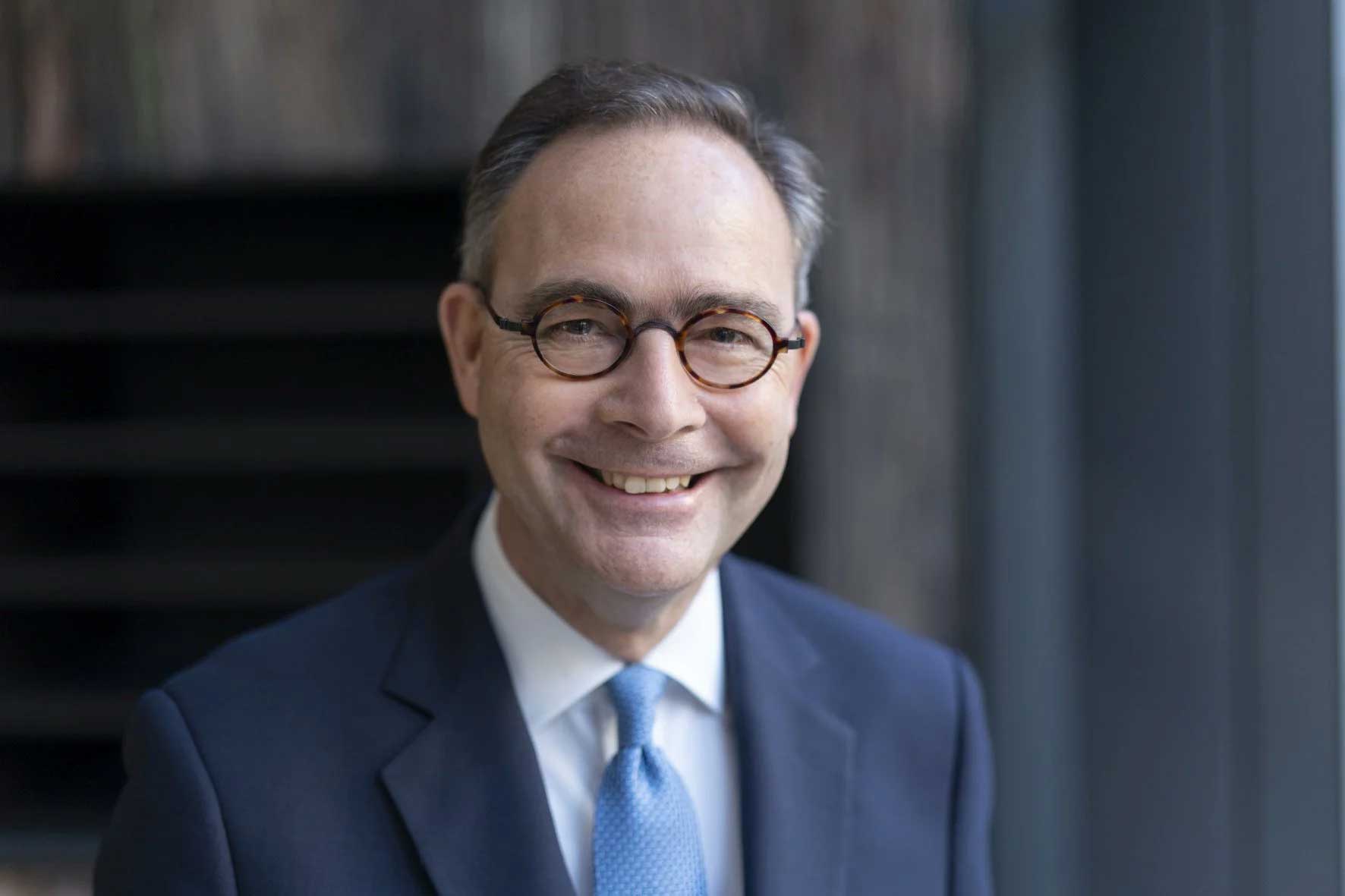
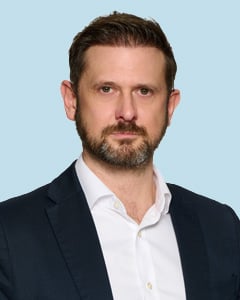
Anthony Vassallo
Allianz Commercial
Allianz Commercial

Climate change is, at its core, an energy problem. To address it, society must scale up renewables at an unprecedented speed. Beyond this, we must also upgrade ageing grids, build new interconnectors, and expand storage. As this build-out accelerates, the insurability of this new infrastructure increasingly depends on sound engineering, high-quality data and early partnership between developers, investors and insurers.
For Allianz, helping make these projects insurable and bankable is as important as financing them. Allianz’s Economic Research notes that trillions of euros will be needed to modernize Europe’s electricity infrastructure and integrate clean power across the economy. Yet policy certainty, grid capacity and risk appetite often lag the pace of technical progress, making it harder to deploy projects at scale.
Allianz Commercial works with clients across renewables, grids, storage and emerging technologies to identify and manage technical, construction and operational risks so that ambitious energy projects can become robust, future-ready assets.
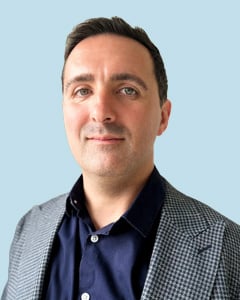
In this first article of a two-part series, Anthony Vassallo and Adam Reed from Allianz Commercial explain how they support clients in navigating the evolving risk landscape of the electricity transition. A second Q&A, to be published in January 2026, will feature Michelle Ruehl of Allianz Investment Management (AIM) and explore how Allianz invests in the future of power. Together, the two interviews show how Allianz combines investment and insurance expertise to help drive the energy transition.
“We come from both sides of the balance sheet,” says Anthony Vassallo, Global Head of Natural Resources at Allianz Commercial. “As an insurer, we transfer both project and operational risks, and Allianz also invests in many of these same technologies.”
Alongside Vassallo, Adam Reed, Global Leader Offshore Renewables & Upstream Energy, provides insight into a lighthouse example of Allianz’ strategy: supporting the development of floating offshore wind as a new generation of robust, insurable energy assets.
Allianz Commercial supports two broad groups of clients in the Natural Resources space: large utilities shifting their portfolios from fossil fuels to renewables; and pure-play renewable developers building and operating green assets from the outset.
While their needs differ, the underlying insurance products — business interruption, liability, property and construction cover — are similar. The difference lies in how Allianz participates.
Rather than writing small follower lines, Allianz aims to take lead positions with meaningful capacity and technical input.
“Capacity is not just a number,” says Vassallo. “For us, leadership means bringing engineering expertise, global coordination and claims capability to the table.”
Acting as a lead insurer enables Allianz to:
In parallel, Allianz Group invests in renewable energy, battery storage, and grid assets through its infrastructure investment platforms. That creates opportunities to share insights between the insurance and investment sides of the energy transition.
Both Vassallo and Reed underscore the importance of early engagement. Major energy projects follow long investment and development timelines. Yet, insurance discussions often begin only once a project is fully designed and ready for tender. By this point, many risk-critical decisions have already been taken, limiting the scope to optimize projects from an insurability perspective.
"All too often, underwriting only really starts six weeks before insurance cover incepts," says Vassallo. "At that point, our options are limited to price and wording. If we are involved at the feasibility or FEED stage, we can help clients think about location, design, and resilience from the outset."
FEED (Front-End Engineering Design) is the crucial phase of major infrastructure projects that sits between the feasibility study and the detailed engineering, procurement and construction phase. Early involvement allows Allianz’s risk engineers to guide key decisions:
To support these choices, Allianz has developed climate-risk analytics such as Climate Adaptation and Resilience Services (CAReS), which provide site-level views of physical perils today and under projected climate scenarios.
These tools help clients understand the total cost of risk, not just upfront construction costs.
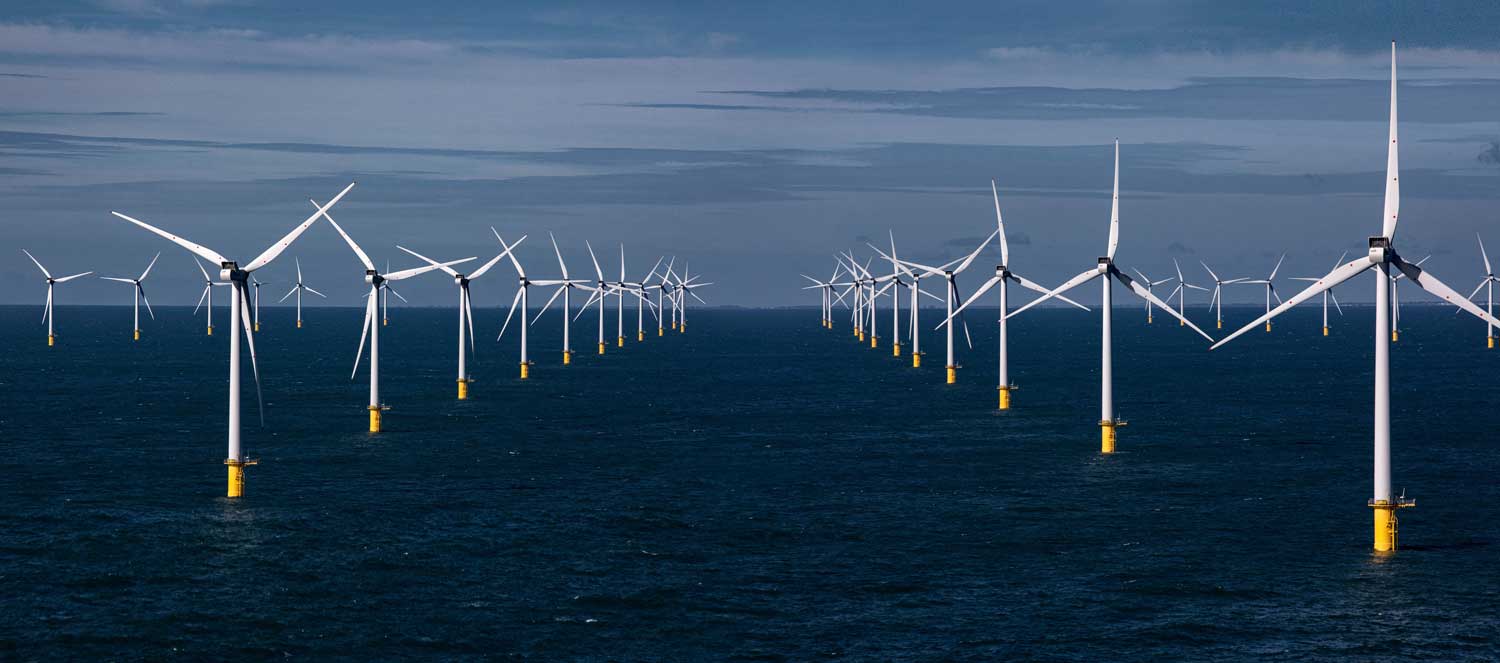
Nowhere is the link between engineering and insurability clearer than in offshore wind.
“Offshore renewables — particularly floating wind — are changing rapidly,” says Reed. “Designs, installation methods and maintenance concepts are still evolving. Clients really value when our engineers engage early and stay involved through the life of the asset.”
Traditional offshore wind turbines are fixed-bottom structures anchored into the seabed. This approach is economical only to depths of around 50–60 meters. Beyond that, foundations become complex and costly — a major constraint, as much of the world's offshore wind resources lie in deeper waters.
Floating offshore wind addresses this challenge. Turbines sit on large floating platforms moored to the seabed and connected via dynamic cables. This unlocks:
However, floating wind also brings additional complexity. Substructures are more complex, marine operations are more intensive, and deep-water repair campaigns are difficult. Recent inflation, higher interest rates, and supply-chain constraints have added further pressure on project economics.
“In that environment, we see the key focus areas as repairability, standardization and better risk allocation,” says Reed. “For floating wind to scale, insurers need to be confident that credible repair concepts exist and that designs are robust. That is what will ultimately stabilize insurance costs.”
Reed points to a client that had previously developed only fixed-bottom projects but is now moving into floating wind.
"They approached us years before construction," he says. "Because of our experience with their existing portfolio, we could work through questions on cable design and protection, burial depth and realistic maintenance strategies. The project is still some way from first power. Still, its risk profile is materially better because of that early dialogue.”
Floating wind is one example in a broader pipeline of technologies Allianz is tracking.
“At any moment, there is a list of technologies clients are excited about,” says Vassallo. “We look at them through three lenses: maturity, track record and the nature of the client relationship.”
Examples include:
Even established segments, such as solar, are evolving. Module efficiencies continue to improve and costs fall, but assets are larger and more geographically diverse.
“Solar today is nothing like solar 10 or 15 years ago,” says Vassallo. “In some regions, if developers choose the cheapest, least resilient panels, they may find it very difficult to secure affordable insurance in future.”
Although renewables attract most of the headlines, grid infrastructure may determine whether the electricity transition succeeds.
“Grids are the unfashionable but essential part of the transition,” says Vassallo. “You can build as many wind and solar parks as you like, but if you cannot move power from where it is produced to where it is needed, the system does not work.”
“In the UK, we regularly see offshore wind farms shutting down or reducing output because the grid cannot absorb the power at that moment,” says Reed. “That is not good for the turbines or cables, it wastes electricity and it undermines project economics.”
Local storage can help, but it is not enough on its own. Interconnectors — high-voltage links between regions and countries — are needed to move power to where it is required and to balance variable renewables over wider areas.
Allianz already insures:
“Under-investment and slow permitting lead to congestion and wasted energy,” Vassallo notes. “Grid and interconnector projects need to be viewed as strategic infrastructure. Our role is to bring capital, engineering expertise and a long-term view so these complex projects can proceed on a sustainable footing.”
Last updated: September 23, 2026
The Allianz Group is one of the world’s leading insurers and asset managers, active in almost 70 countries and serving around 97 million private and corporate customers*. Our customers benefit from a broad range of personal and corporate insurance services, including property, life and health insurance, as well as assistance services, credit and global business insurance. Recognized for the seventh consecutive year as the number one global insurance brand in Interbrand’s Best Global Brands 2025 ranking, Allianz’s success is built on technology-enabled customer centricity – providing peace of mind, protection, and prevention for our customers and strengthening the resilience of individuals, communities, and societies. We are one of the world’s largest investors, managing around 791 billion euros** on behalf of our insurance customers. Furthermore, our asset managers PIMCO and Allianz Global Investors manage about 2.2 trillion euros** of third-party assets. Thanks to our systematic integration of environmental and social criteria in our business processes and investment decisions, Allianz received an MSCI ESG Rating of AAA (as of March 2026). In 2025, our 156,000 dedicated employees achieved a total business volume of 186.9 billion euros and an operating profit of 17.4 billion euros for our shareholders.
* As of December 31, 2025. Customer count reflects Allianz customers in consolidated entities that are part of the customer reporting scope only.
** As of June 30, 2026.