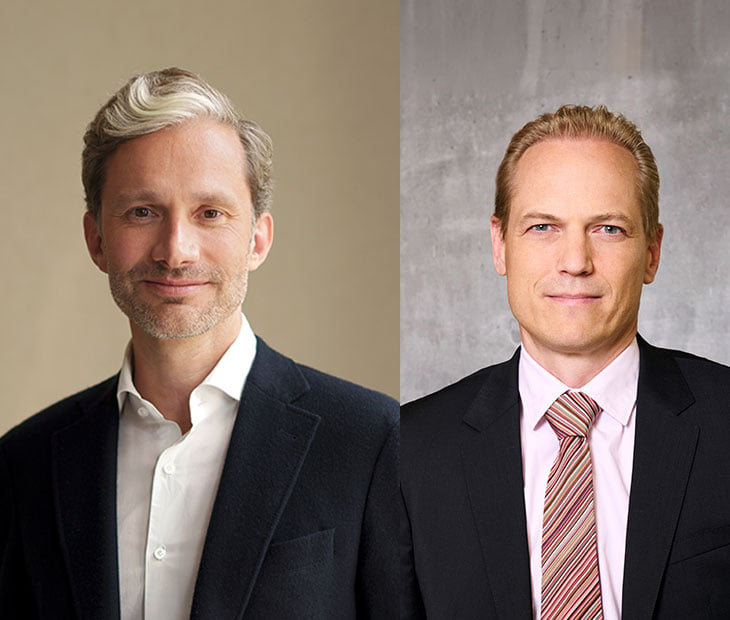
By Matthias Trüstedt
Group Head of Global P&C
Group Head of Global P&C

Today, we face an urgent need for stronger climate adaptation and more effective prevention measures to tackle increasing damages caused by natural disasters – to keep Europe both insurable and ultimately inhabitable.
While natural disasters in North America and Asia, as the wildfires in California (2025), or the earthquakes in Turkey/Syria (2023), have received substantial media attention, the continent heating up fastest on earth is actually Europe: Annual economic losses from natural disasters have increased by more than five times to an average of ~€45 bn between 2020 to 2023, making Europe a worldwide “climate hotspot”.
The increase in frequency and severity of losses from natural catastrophes (NatCat) is a core focus for insurers. At Allianz, we have established and continuously work on excellence in NatCat risk understanding and management, acting as a driver of resilience and leader in prevention.
Our free-of-charge online risk assessment tool provides valuable information on the residential climate risks well as practical options for effective prevention and increasing resilience - based on simply your home address.
By actively informing our customers with targeted warning messages when storms or hail are threatening locally, we help them to be better prepared and secure their belongings.
We advocate for and support climate-resilient reconstruction of affected buildings after a damage event, by contributing to additional costs and advising on home resilience improvements.
In parallel, we constantly work on further improving the quality of our risk models to better understand and predict risks and be able to calculate risk-adequate insurance premiums.
However, increasing awareness and supporting prevention and resilience at customer level will not be enough to keep insurance affordable and viable for all. Public authorities, corporates and society at large must work together with insurers to pro-actively tackle and manage the increasing impact of natural disasters. This is our only option to effectively reduce risks, related costs and the hardships posed by NatCat events; any mere redistribution of risks and costs will soon become unaffordable and hence unstainable.
There are great real-life examples showcasing the impressive business case of prevention, such as the Thames Barrier in London. This retractable storm surge barrier at the entrance of the Thames was built in 1982 to protect Greater London from exceptionally high tides and storm surges; it would cost around 2.4 billion British pounds at today's prices. For a single large storm surge, the barrier prevents the flooding of more than 100 square km of land that would put hospitals, power stations and the London Underground out of action, with an estimated prevented damage of around 50 billion British pounds – per event!
This also shows why the public sector should create the right conditions to make these kind of projects investable for the private sector for the benefit of society at large.
Similar projects exist across the EU, but in many cases, progress has been extremely slow. In Germany, the National Flood Protection Program of 2013 provides legal foundations for infrastructure projects similar to the Thames Barrier. However, after more than a decade, only five percent of planned infrastructure projects are completed, with just another 16 percent in planning or construction. At this speed, Germany will still not be finished in 100 years – but climate change doesn’t wait.
Investments into prevention and resilience are one of the best business cases available to governments right now, with every Euro invested avoiding damages worth four to ten Euros – not just once, but for every large NatCat event. Allianz is working with governments to provide expertise, data and insights into the decision-making process of public infrastructure investment for protection.
To further reduce the insurance protection gap, protection against NatCat risk should be offered automatically in building insurance. Premiums should always be risk-based to prevent perverse incentives (i.e. building new homes in high-risk zones) and make investments into prevention and resilience viable for individual home owners as well as state actors.
Regulatory and legal frameworks are crucial for narrowing the protection gap and maintaining affordable insurance. Updates to building codes and land use planning are essential for climate adaptation. Construction in high-risk zones should legally be prohibited, and existing buildings should be retro-fitted with proven prevention measures (e.g. flood walls).
Nothing is as expensive and unsustainable as doing nothing or not enough – which is why all parties – the state, the insured, and of course us insurers – must work together to reduce future damages and adapt to the impact of climate change, to keep insurance affordable and Europe inhabitable.
Last updated: September 23, 2026
The Allianz Group is one of the world’s leading insurers and asset managers, active in almost 70 countries and serving around 97 million private and corporate customers*. Our customers benefit from a broad range of personal and corporate insurance services, including property, life and health insurance, as well as assistance services, credit and global business insurance. Recognized for the seventh consecutive year as the number one global insurance brand in Interbrand’s Best Global Brands 2025 ranking, Allianz’s success is built on technology-enabled customer centricity – providing peace of mind, protection, and prevention for our customers and strengthening the resilience of individuals, communities, and societies. We are one of the world’s largest investors, managing around 791 billion euros** on behalf of our insurance customers. Furthermore, our asset managers PIMCO and Allianz Global Investors manage about 2.2 trillion euros** of third-party assets. Thanks to our systematic integration of environmental and social criteria in our business processes and investment decisions, Allianz received an MSCI ESG Rating of AAA (as of March 2026). In 2025, our 156,000 dedicated employees achieved a total business volume of 186.9 billion euros and an operating profit of 17.4 billion euros for our shareholders.
* As of December 31, 2025. Customer count reflects Allianz customers in consolidated entities that are part of the customer reporting scope only.
** As of June 30, 2026.

.jpeg)