


Last updated: September 23, 2026

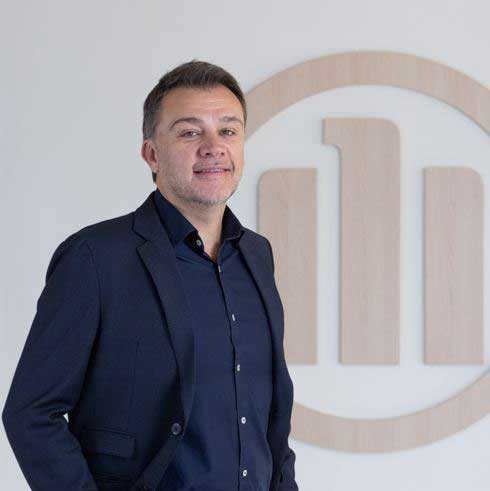
Interview with Mario Anero Carcamo on Allianz Spain’s Proactive Wildfire Outreach
Most customers do not expect us to care so much
How intense were the fires that struck Spain, and what made you decide to reach out to clients?
Just in August 2025, Spain battled scores of significant wildfires, including 53 large wildfires, which is defined as greater than 500 hectares burned. By late August, the total area burned nationwide had surged to over 400,000 hectares, covering a massive area, particularly in Castilla y León, Galicia, Extremadura and Asturias, Madrid, Toledo and Cádiz, making it one of Spain’s worst seasons in decades. During the fires, we at Allianz Seguros initiated our catastrophe protocol and began proactively contacting customers in the affected and adjacent areas to warn them and see if they were alright.
Is this the first time you have undertaken such an action?
No. Three years ago, we defined the protocol for responding to extreme natural disasters, such as fires and floods, and localized emergencies, such as explosions. For weather events, we also run structured, automated processes. Based on 24–48-hour forecasts from multiple providers, our systems identify potentially affected areas and send thousands of proactive SMS and emails.
For instance, in 2024, when a year's worth of rain fell in a few hours in Valencia, triggering catastrophic flash floods, we had sent out almost 60,000 warning SMSs to customers in the area some 24 hours before. Awareness of our service has grown since regional authorities have since been accused of delayed or insufficient alerts and slow coordination.
So, did you send an SMS message about the fires?
No, we called our customers directly. We utilized an in-house geospatial exposure-mapping tool, called SPHERE, to identify customers within the affected regions. The tool lets us export a list of exposed customers. From there, our team retrieves the records and begins making calls. We made several hundred calls, and if we couldn't reach the people, we then sent an email.
How do you handle the call? What do you actually say?
People are often surprised. We call and say: “Good morning, this is Allianz, your insurer. We’re aware of the wildfire in your area. We want to make sure you’re safe. If you need anything, we’re here to support you.” That’s the approach. We also involve or remind customers about their broker, who needs to be in the loop and support them as well. We had some very emotional conversations — people can see flames near their properties; some have animals to worry about. However, our purpose is simple: to urge them to be safe first and then support them second.
Did you make calls personally?
Yes, both during the Valencia catastrophe and during last summer. I am a member of a service unit and truly believe that these type of actions are part of our duties.
How was it to make such calls? It must be emotionally draining.
As I mentioned, we had some very emotional calls, but the overwhelming response from customers was one of gratitude.
Seriously!
Yes, several people told me it was the nicest call they had ever received from an insurance company. We were not trying to sell anything; we were not questioning a claim. Our purpose was simply to ensure they are safe. Many people told us it’s the first time an insurer has called them to check on their safety. As far as I know, we are currently the only insurer here offering this service. This distinguishes us and can create an emotional bond with the customer, but this is not the goal. We’re checking on safety and well-being and offering help where needed. It’s not a Public R elations exercise; it’s something we genuinely believe in.
Concretely, what help can you provide?
For personal safety, we always tell customers to follow the official instructions from authorities and firefighters. We won’t contradict them. Once the fire is controlled, if there’s damage, we can use our fast-track claims tools because we already know the situation. We can deploy loss adjusters quickly and guide customers through the next steps. For hazards like hail or severe wind, where safety is not immediately at risk, our messages include links with practical guidance tailored to the peril. Wildfires are different: the message is “Are you safe? Follow the authorities. We are here to help you where necessary. Property can be repaired; your safety is paramount.”
Did you call all customer types?
We focus on household, SMEs and commercial property risks. Motor is harder because the vehicle location doesn’t necessarily match the address where it is registered. We prioritize the risks where the geolocation danger is clear.
How do you coordinate with brokers, agents, and public authorities to avoid mixed messages?
We contact key brokers in the affected area early. They appreciate the call and often provide us with on-the-ground insight, as TV images can be ambiguous. We keep them updated as the situation evolves and offer support, for example, by providing a dedicated phone line and our people to help them register claims if volume spikes.
What inspired the protocol in the first place? Is it a necessity, given that events like these are becoming more frequent, or does it stem from a service-oriented mindset?
Both. Climate change is real, and events are becoming more frequent and more intense. However, it's also about mindset: insurance ultimately comes down to underwriting and claims, and a claim is the human aspect of the insurance promise. This protocol reminds everyone of our purpose and what sets us apart. Our competitors may adopt a similar approach in the future, and that’s fine. It’s good for all customers.
Dealing with such situations can be harrowing. Do you offer counselling to your staff who have to make the calls?
Our claims professionals are very well trained, also in the emotional part of our job. In many cases, the people we speak with have no damages and are very surprised and happy to hear from us. But even when emotions run high, our teams often say these are the most meaningful calls they make. It’s the opposite of telling someone, "This isn’t covered.” You feel you’re doing something that matters and that provides a powerful sense of purpose.
“God bless you”
The phone rang again! Still shaken after a narrow escape from the August wildfires, she answered. "Good morning — am I speaking with the homeowner? I'm calling from Allianz. We insure your home, and we want to make sure you and your family are safe."
She could hardly believe it. Evacuated only hours earlier, and her insurer was already checking in.
When disasters strike, Allianz claims teams in Spain brace for every emotion at the other end of the line. Sometimes, there is surprise — like the couple from Madrid with a second home in northern Spain, who first learned of their fire damage when Allianz called. Sometimes there is anger and exhaustion from those who waited for emergency services help that never came.
And often there is gratitude: In northwestern Spain, a couple stayed to defend their house and barn. Three windows blew out when flames reached a butane cylinder, and the husband suffered burns trying to fight the fire with a hose. While he was recovering in the hospital, his wife was already discussing the claim and next steps with Allianz.
Within three weeks of the summer fires, more than half of the home insurance claims were already resolved. What remained were the complex cases: severe property losses awaiting repair estimates and burned-out businesses requiring detailed assessment.
During such emergencies, Allianz sends out early warnings where possible, provides clear guidance during the emergency, and makes personal calls afterwards to explain, listen, and help rebuild.
As She ended the call — still unsteady but reassured about her future — she left the claims handler with three quiet words: “God bless you.”
Further information
More news
About Allianz
The Allianz Group is one of the world’s leading insurers and asset managers, active in almost 70 countries and serving around 97 million private and corporate customers*. Our customers benefit from a broad range of personal and corporate insurance services, including property, life and health insurance, as well as assistance services, credit and global business insurance. Recognized for the seventh consecutive year as the number one global insurance brand in Interbrand’s Best Global Brands 2025 ranking, Allianz’s success is built on technology-enabled customer centricity – providing peace of mind, protection, and prevention for our customers and strengthening the resilience of individuals, communities, and societies. We are one of the world’s largest investors, managing around 791 billion euros** on behalf of our insurance customers. Furthermore, our asset managers PIMCO and Allianz Global Investors manage about 2.2 trillion euros** of third-party assets. Thanks to our systematic integration of environmental and social criteria in our business processes and investment decisions, Allianz received an MSCI ESG Rating of AAA (as of March 2026). In 2025, our 156,000 dedicated employees achieved a total business volume of 186.9 billion euros and an operating profit of 17.4 billion euros for our shareholders.
* As of December 31, 2025. Customer count reflects Allianz customers in consolidated entities that are part of the customer reporting scope only.
** As of June 30, 2026.
Cautionary note regarding forward-looking statements
As with all content published on this site, these statements are subject to our cautionary note regarding forward-looking statements: