
For homes, businesses and cities, the core lesson is similar to other natural hazards but with an extra dimension: prevention first, preparation always and recovery that rebuilds stronger structures while restoring and adapting the wider landscape and community.

Even before embers fly, be ready with smart wildfire prevention
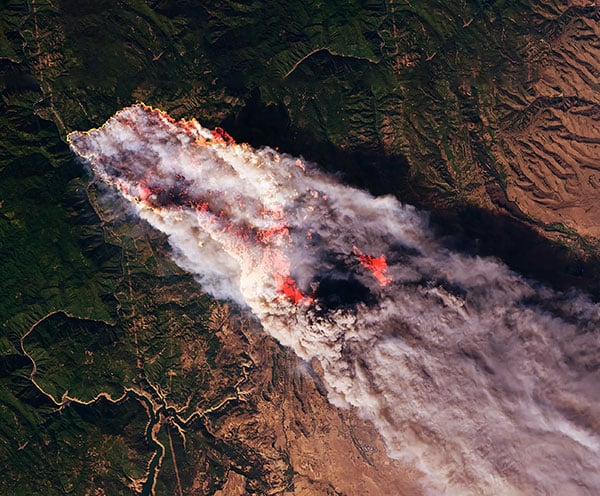
As our summers grow hotter, drier and windier, wildfire risk is increasing. Embers fly, flames move fast – across grass, scrub and forest, into streets, yards and roofs. Smoke travels even farther, cutting visibility, slowing transportation, and straining health systems.
Wildfire 101
How wildfires start
Wildfires ignite from human activity or lightning. Dry vegetation, low humidity and wind then accelerate their spread. Climate change intensifies these conditions, by raising temperatures, drying landscapes and lengthening wildfire seasons.
Where wildfires strike
Wildfires remain most common in the western United States, western Canada, southern Europe, and Australia – regions with hot, dry spells, abundant fuels and frequent wind events.
At the same time, fires are becoming more frequent in regions that may be surprising, such as central and northern Europe; a trend the European Environment Agency links to a warming climate. High-latitude forests have also seen a sharp increase in fire frequency, with Canada’s 2023 season burning about 7.8 million hectares – roughly the size of the Czech Republic – underscoring the region's vulnerability.
Wildfire is even appearing outside the traditional summer window: the Marshall Fire in Colorado, USA, for example, spread through suburban communities in the depths of winter, destroying neighbourhoods and highlighting how unprepared many temperate regions still are for this kind of risk.
Parts of East Asia are following this pattern: in 2025, South Korea endured some of its most destructive wildfires in living memory, with blazes in March and April forcing evacuations, damaging communities and underscoring how quickly wildfire risk is rising outside the traditional fire belts.
The cost of wildfires
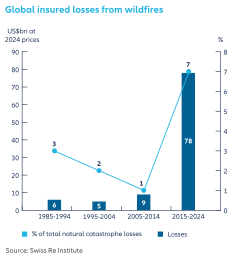
From 2005 to 2014, global insured wildfire losses were about USD 9 billion. From 2015 to 2024, they increased to about USD 78 billion – more than six times higher. Wildfire seasons now start earlier and last longer in many regions.

First half of 2025 sets a new USA disaster record
In the first half of 2025, the United States recorded fourteen separate weather disasters with damages of at least USD 1 billion each, totaling about USD 101 billion – the highest first half since records began in 1980. The Los Angeles wildfires in January accounted for most of the losses, destroying approximately 16,000 buildings and linked to around 400 indirect deaths; at about USD 61 billion in general damages and are the only top ten event that is not a hurricane.
Wildfire resilience: a shared project
Wildfire risk cannot be managed one property at a time. Fires move across fences, streets and forests, so even a well-prepared home or facility remains exposed if the surrounding landscape, utilities and neighborhood are highly flammable.
Fire safety depends on households, businesses, communities and policymakers working together. Individual measures like hardening buildings and clearing vegetation matter, but they are most effective when they fit into local planning and emergency systems.
What works at community level
- Community programs (for example Firewise-style schemes) that set shared standards for defensible space, fuel management and early detection.
- Regional initiatives that combine technology (risk maps, evacuation drills) with practical prevention (fuel breaks, better access for firefighters).
Why policy and planning lead
Voluntary actions are important, but structural measures are decisive:
- risk-aware land-use planning
- modern building codes that require fire-resistant materials and designs
- coordinated warning and evacuation plans.
Policy and community action set the frame; household and business steps work best inside that frame, reducing losses for both individual properties and the wider community.
-
Tips for people & communities
-
Tips for businesses
Wildfires’ damage to people and communities
Wildfire risk is not just a fire problem. Smoke, embers and cascading outages spread harm far beyond the flame front, affecting people, homes and ecosystems.
Every major wildfire leaves behind heavier health burdens, property damage and disruptions to transport, utilities, businesses and public services, with children, older people, those with existing health conditions and low-income communities hit hardest. When households, businesses and authorities prepare under normal conditions – clearing vegetation, hardening buildings, running drills and updating evacuation plans – than even extreme fire days, while still challenging, can become more manageable events rather than escalating into cascading crises.
Protecting your property and people
-
Before
-
During
-
After
Before – harden the home, tidy the yard, and ready your family
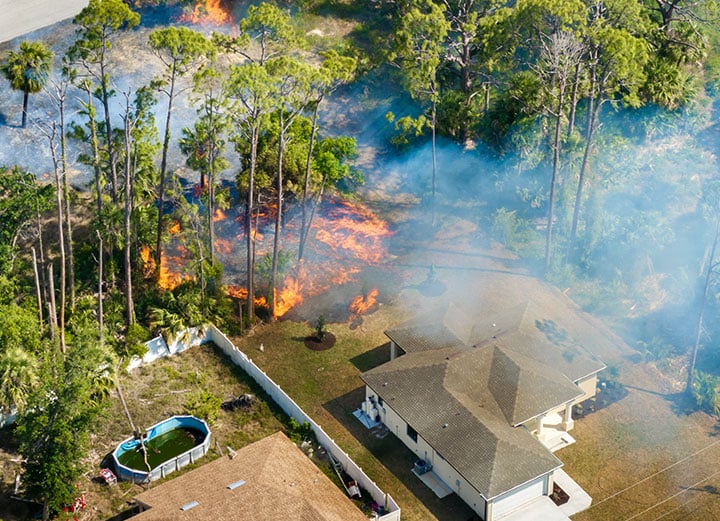
- Clear a defensible space right next to the house. Keep the area along walls free of plants, mulch, firewood and furniture. Use paving, gravel or bare soil. Do not plant shrubs directly in front of windows.
- Tidy the ‘garden.’ Space plants, remove dry leaves and branches, keep lawns well trimmed and remove low tree limbs so fire can’t climb. Do not allow trees to overhang or touch the roof.
- Keep firewood, gas cylinders, dry vegetation and other combustible materials away from the walls of the house.
- Harden the roof and walls. Choose fire-resistant materials whenever possible, and keep gutters and roofs clear on a regular basis.
- Block ember entry. Cover vents with fine metal mesh, seal gaps around roofs and walls, and enclose the underside of decks (or keep them completely clear).
- Fix fence and shed touchpoints. Add a non-combustible break where wooden fences meet the house, keep signs and stored items away from walls, and move stacked timber or plastics well clear.
- Plant smart and maintain. Select less flammable species, keep plants green and trimmed, and establish a simple seasonal cleanup routine.
- Keep access open and services safe. Ensure fire crews can reach your home, identify your water sources, and protect outdoor electrical equipment and fuel tanks from heat and embers.
- Plan for people and pets. Agree on two ways out, pack a small 'go bag' for each person and pet, store key documents in a fire- and water-resistant pouch, and sign up for official alerts.
During – act early, protect people first, property second
Decide early
- Follow official warnings; if instructed to leave, go early. Don't wait for flames.
If evacuating
- Take people, pets, go-bags and meds.
- Wear long sleeves, trousers, and sturdy shoes; use an FFP2/N95 mask if you have one.
- If possible, travel together in one vehicle to stay coordinated and reduce traffic. If you need two vehicles do so. Have your phones charged; and leave the gates unlocked.
If there’s time (and it’s safe)
If there is enough time before evacuation orders and conditions allow without you putting yourself or others at serious risk:
- Close all windows/doors; shut internal doors and curtains.
- Check on vulnerable neighbors and help to evacuate.
- Turn off or set HVAC/AC to recirculate; turn off fresh-air intakes.
- Remove mats and furniture from porches; clear easy ember traps.
- Only wet likely ember spots if authorities advise and water pressure allows.
- Move cars off the street to open evacuation routes ; switch on exterior lights; make the house number visible.
- Switch off non-essential circuits.
On the road
- Headlights on, windows up, AC on recirculate; avoid smoke, embers and downed power lines.
Stay informed
- Keep phone alerts on; use a battery radio if coverage fails.
After – return safely, rebuild to a higher standard
- Re-enter carefully: Wait for the all-clear; watch for hot spots, ash pits, unstable trees and downed lines.
- Document first: Photo/video everything before moving it; ventilate; clean with gloves and a FFP2/N95 mask or respirator as smoke and ash can be toxic; check attics/vents/under decks for embers.
- Utilities check: Don't re-energize power, gas or HVAC until inspected; replace smoke-clogged filters; discard spoiled food, water and medicines.
- Work with your insurer: Report damage early; keep receipts; use vetted contractors – avoid door-to-door cash offers.
- Safe cleanup: Lightly wet debris; avoid dry sweeping; separate salvageable items and move undamaged ones to a clean, dry area. Thoroughly clean all possessions and wall surfaces.
- Rebuild to higher standards: Fire-resistant roof, ember-proof vents, non-combustible cladding; triple pane glazed windows; clear/close under-deck areas; raise or relocate outdoor electrics and fuel; ensure new landscaping maintains defensible space around the home.
- Update the plan: Capture lessons, fix gaps in go-bags and contacts, and schedule a pre-season drill.
How wildfires disrupt operations
Wildfire risk reaches far beyond the flame front. Smoke harms staff health and smoke infiltrates buildings and contaminates interiors and stock. Wind-driven embers can travel long distances and penetrate gaps in roofs, vents and plant rooms, igniting hidden fires that are difficult to detect and control. Power and telecom failures halt operations; road closures and cordons block access; data center and vendor outages ripple through supply chains.
Even after the front passes, air quality, soot, water damage and labor shortages can extend disruption for weeks or months, creating multi-year business interruption across sectors. Plan for cascading impacts, not just direct fire.

-
Before
-
During
-
After
Before – prepare the organization (make ignition harder, downtime shorter)
People & operations (Owner: HSE / HR / Business continuity)
- Set air-quality triggers for masks, remote work and task stand-downs.
- Pre-assign evacuation triggers, emergency supervisors, assembly points and shift transport.
- Build a communication tree that works without mobile phones; keep a paper copy.
- Train safety supervisors; run pre-season drills and quick “smoke day” exercises.
Site & building hardening (Owner: Facilities / Engineering / Real estate)
- Reduce fuels near buildings; keep hydrants and access lanes clear.
- Block ember entry (screened vents, sealed penetrations, enclosed service voids).
- Use non-combustible cladding/roofing; upgrade window glazing on critical façades.
- Map critical plants and add shielding or relocation plans; move bins/pallets/planters away from walls.
Smoke & contamination (Owner: Facilities / HSE / Operations)
- Stock spare filters and portable air scrubbers for priority rooms.
- Write a post-event cleaning protocol.
- Define stock quarantine/tesing steps for potentially contaminated goods.
Utilities, IT & access (Owner: Engineering / IT / Security)
- Load-test generators; stage fuel; prioritize critical circuits.
- Set telecom failover (second carrier/routing; satellite for command posts).
- Plan for cordons: vendor/staff permits, escorted access, and site maps for authorities.
Supply chain & finance (Owner: Procurement / Finance / Operations)
- Identify single-point suppliers and lanes; line up alternates and emergency contracts.
- Hold a buffer stock of critical items during the fire season; plan for clean or cold storage as needed.
- Treat wildfire as a top business interruption (BI) risk in registers and board reports; enable fast-track payments for emergency works.
Liability controls (ignition risk) (Owner: HSE / Site leads / Contractors)
- Hot-work permits with weather checks; auto stand-downs on high-risk days.
- Enforce a no-smoking policy; restrict mowing/grinding/vegetation work during peak hours.
- Induct contractors; require method statements and stop-work authority; keep permit/inspection logs.
During – act early, protect people first, stabilize operations
Life safety and decisions
- Follow official warnings; Leave immediately when advised and do not wait.
- Account for all staff and contractors, and where possible relocate higher-risk individuals (for example older employees, those with respiratory or other health conditions, or pregnant staff) to safer locations or remote work.
Communications & coordination
- Switch to your incident comms plan; send short, time-stamped updates to staff, customers and key vendors.
- Keep a log of decisions and the triggers that led to them.
Access & security
- Prepare for cordons; coordinate entry with authorities.
- Lock down non-critical areas; open gates and mark hydrants for responders.
Air & interiors
- Set the HVAC to recirculate where safe; increase filtration; minimize door cycling.
- Protect clean areas and sensitive stock; stage portable air scrubbers for priority rooms.
Power, IT & plant
- Prioritize critical circuits; start generators if needed; monitor fuel and loads.
- Fail over telecoms; protect data and backups; postpone non-essential processing.
- Stop hot work and outdoor spark-risk tasks.
Operations & welfare
- Adjust shifts as needed; provide masks and eye protection; enable remote work where possible.
- Brief staff on safe travel routes and assembly points.
After – restart safely, rebuild to a higher standard
Access & assessment
- Wait for the all-clear; check for hot spots, ash pits and downed lines.
- Complete structured damage surveys before moving equipment or stock to ensure accurate documentation.
Contamination control
- Quarantine affected areas; wet down debris; avoid dry sweeping.
- Ensure employees wear proper safety gear, such as FFP2/N95 masks and gloves for cleanup work.
- Replace filters; inspect ducting and coils; certify indoor air before full re-occupancy.
- Segregate suspect stock for testing, salvage or disposal.
Utilities & plant
- Re-energize power, gas and HVAC only after inspections by qualified technicians.
- Test the critical plant under load; monitor for abnormal vibration, heat, or odors.
Claims & documentation
- Notify your insurer promptly and keep all relevant documentation, including photos, logs, and receipts.
- Use vetted contractors for emergency boarding, tree work and drying.
Resilient reinstatement
- Upgrade the envelope: install a fire-resistant roof, ember-resistant vents, non-combustible cladding, and robust window glazing.
- Raise or relocate outdoor electrics, fuel and telecoms away from heat and ember paths.
- Refresh landscaping to maintain defensible space.
Debrief & update
- Capture lessons learned; adjust triggers, ownership and vendor lists.
- Schedule drills and maintenance for the upcoming season.

What is a “red flag” day?
In the United States, a Red Flag Warning signals critical fire weather in thenext roughly 12-24 hours. In Europe, agencies rely on the European Forest Fire Information System, which maps daily danger with the Fire Weather Index in six classes from low to very extreme and provides 1-9-day forecasts used to trigger national alerts.
Australia uses the Australian Fire Danger Rating System – Moderate, High, Extreme, Catastrophic – with Total Fire Bans and advice to leave bushfire-risk areas on Catastrophic days. Canada uses the nationwide Canadian Forest Fire Weather Index System to rate fire danger and support provincial advisories displayed on public dashboards.
Insurance's role in wildfire risk mitigation
Insurance’s role in wildfire risk mitigation
Insurers do more than pay claims. Done well, insurance helps people and businesses anticipate, withstand and recover from wildfire shocks by turning hazard science into site-level action, guiding safe decisions during events and financing resilient rebuilds after.
But insurance alone cannot restore communities or ecosystems. Lasting recovery depends on coordinated public policy, infrastructure resilience, and systemic action.
Allianz combines risk analytics, on-the-ground support and fit-for-purpose coverage to reduce losses before, during and after fires.
To prepare, Allianz translates climate and fire-weather data into practical steps. For households and businesses, GloRiA provides a straightforward view of local natural-hazard exposure, including wildfires where applicable, and suggests mitigation measures.
For larger clients, CAReS transforms multi-peril modelling into site-specific actions and portfolio steering – from defensible-space design and ember-resistant upgrades to business continuity triggers aligned with future climate scenarios.
When severe situations escalates, Allianz teams prioritize customer outreach, provide practical work-safe guidance and connect policyholders with vetted partners for emergency boarding, hazardous tree and debris removal, and temporary power; digital assessments are used where feasible to speed first steps.
For the best possible recovery rapid on-site assessments, advance payments where available, and a repair-instead-of-replace mindset to cut waste and downtime. Rebuild guidance focuses on Class A roof systems, ember-resistant vents, non-combustible cladding, and relocating critical services, as well as updated vegetation plans.
Bottom line
Insurance protects when a loss occurs – and, when used proactively, steers toward better outcomes before and after. Allianz's wildfire guidance, analytics and claims practice aims to keep people safe, cut ignition and damage potential, and shorten the path to a safer, more resilient rebuild.
When the fire is out, the disruptions begins
Wildfires don’t just burn. They block roads, foul air, taint water systems and snarl supply chains – often for weeks and even months after the last ember fades. “The flame is only the start,” says Andrea Albertini, Senior Risk Engineer at Allianz Commercial. “Most delays come from access, utilities and hidden contamination – not the fire itself.”

On-the-ground support when you need it
One of Southern Europe's most severe recent wildfire outbreaks occurred in Spain in August 2025. More than 400,000+ ha were burnt. During the crisis, Allianz Spain activated a wildfire protocol, which involved contacting potentially affected customers via Allianz Alert, making hundreds of proactive calls, and opening a toll-free line to prioritize claims and expert networks while scaling digital assessments.


Fast-tracking food-spoilage claims after disasters
After natural catastrophes (NatCat), power outage can spoil food in thousands of homes at once. These small, simple claims pile up behind urgent, complex losses – so customers may wait days for a payout that could be a quick resolution.
Allianz Australia has launched an agentic-AI flow for fast food-spoilage claims (typically under AUD 500). Seven specialized AI agents handle the checks – coverage, weather match, fraud signals, payout – then hand a clear summary to a human to approve.
The result is that turnarounds have shrunk from days to hours, claim queues are cleared quicky during NatCat spikes, and teams can focus on customers with tougher, more emotional cases. It’s modular and scalable, so the same human-in-the-loop approach can roll out to other high-volume, low-complexity claims – speed with consistency, anchored by human judgment.
Allianz Seguros and Satellites on Fire have launched an initiative to promote new capabilities for early wildfire detection through artificial intelligence and satellite technology. By anticipating risks and reducing the impact of large fires, the project supports a shift from incident response to risk prevention. Discover how technology can help gain crucial time to protect people, land and economic activity.
When insurance reaches its limits
Insurance is a powerful tool for managing wildfire risk, but it cannot fix a structurally unsafe landscape. In some high-risk regions, hotter, drier conditions, expanding development in fire-prone areas and slow policy action are pushing parts of the market towards the edge of insurability.
Where cover is shrinking
In several fire-exposed areas, insurers are tightening terms, raising premiums or limiting new business, for example:
- parts of California
- highly exposed regions of southern Europe, including Greece
- rural–urban fringe areas in states such as New South Wales, Australia.
This reflects basic risk arithmetic: when expected losses are too high, too frequent and too correlated, insurance alone cannot carry the full burden. In the most exposed zones, affordable cover may no longer be available or may come with significant exclusions and higher deductibles.
Why policy must lead
Household and business checklists remain important, but they are no substitute for structural measures such as:
- risk-aware land-use planning that limits new building in the highest-risk areas
- enforced, modern building codes that harden structures against embers, heat and smoke
- sustained fuel management and resilient infrastructure (roads, power, telecoms, water).
A more holistic approach combines insurance with proactive prevention, resilient infrastructure and strong public policy. Public–private partnerships, risk-pooling mechanisms and coordinated community programmes all help ensure that communities can adapt to escalating wildfire risks, rather than simply absorbing ever-larger losses.
New technologies and products for wildfire protection
New tech is changing how we live with wildfire. From early detection and smarter planning to tougher materials and faster payouts, these tools help organizations reduce risk and recover sooner.
-
Betterforesight
-
Asset hardening
-
Loss-prevention advice
Better foresight: outlooks, indices and satellites
- Near-real-time satellite feeds – for example NASA’s FIRMS system, which posts worldwide fire detections within a few hours, or Digital Earth Australia’s “Hotspots” service with updates every 10 minutes – flag new hotspots on a map so authorities and communities can see where fires may be starting or spreading. Similar geostationary systems, such as GOES for the Americas and Meteosat for Europe and Africa, provide frequent scans that help track fast-moving fronts.
- The European Commission’s Global Wildfire Information System (GWIS) brings together multiple satellite fire-detection products with ECMWF’s global fire-danger forecasts, giving emergency managers and policymakers a common view of where conditions are critical and where new ignitions are appearing.
- Around these public systems, a fast-growing ‘firetech’ sector is emerging. Companies are building services that fuse satellite, aerial and ground-sensor data with AI to detect hotspots earlier, map smoke plumes, forecast fire spread, support evacuation and traffic planning, and improve firefighter safety. Others focus on new materials, building technologies and equipment that make structures and critical infrastructure more resistant when fires do occur.
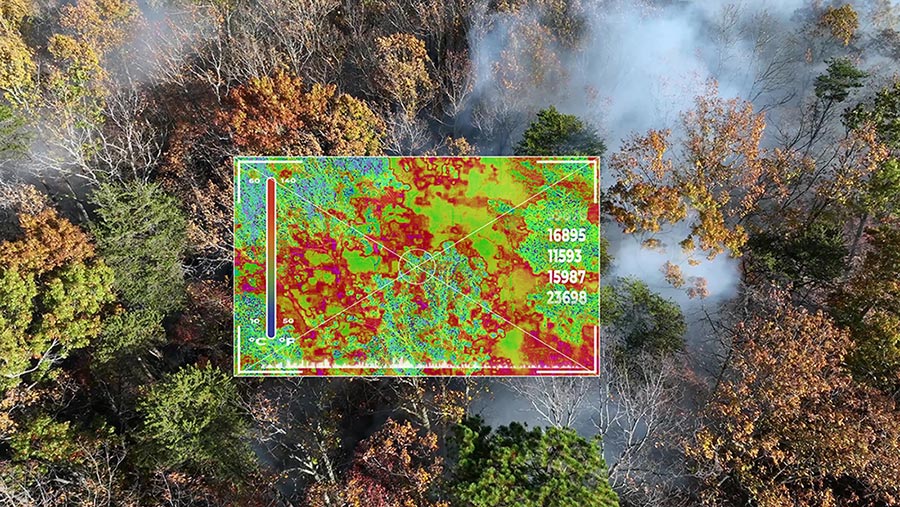
Increasingly, drones are equipped with thermal cameras to detect hidden hotspots through smoke, map the fire's edge in real-time, and – when used by trained crews – carry out precise aerial ignitions for prescribed burns that reduce excess fuel. This is being used in the United States and is being tried in Australia.
Asset hardening: products that resist embers, heat and flame
Today’s fire-smart products – ember-proof vents, wildfire shutters and advanced coatings – are designed to keep flames out and heat at bay.
Smarter ember guards.
Fine metal meshes fitted to vents, weepholes and other openings now stop embers from getting inside.
Wildfire shutters for windows.
In high-risk areas, purpose-built shutters shield glass from fierce heat and direct flame. They're tested to strict national Australian standards before they are sold.
Wildfire-resisting timber & coatings.
If you use timber, choose products specifically tested and certified for wildfire exposure (fire-retardant-treated wood or systems with intumescent coatings). Use the exact tested system specific to your region – timber species, coating, thickness and fixings matter.
How Allianz plugs fire tech into loss-prevention advice
- Allianz Commercial and Allianz Risk Consulting (ARC) integrate seasonal outlooks, fire-weather indices, satellite/camera feeds, drone/thermal surveys and GIS access mapping into site-level advice and portfolio views – helping clients identify ignition risks, plan access/egress and document wildfire plans aligned with local authorities.
- Build Back Better (claims-time upgrade)
Where available, Build Back Better provides additional coverage at claims time, allowing you to choose more fire-resistant materials during repairs. Availability, limits and eligibility vary by country, line of business and endorsement; ask your Allianz contact what applies to your policy.
Resources

Further reading
- Wildfire Readiness (Allianz Risk Consulting) – three-page bulletin: step-by-step defensible space and building measures (vents, roofs, windows, materials).
- Emerging Risk Trend Talk: Wildfires (Jan 2025): business impacts (BI, infrastructure loss, smoke exposure), sector vulnerabilities, and preparation checklist.
- Allianz Research (Apr 2025) – climate adaptation special: macro view of wildfire shocks (e.g., LA 2025) and knock-on effects for local economies and businesses.
- Allianz Risk Barometer 2025: places BI and natural catastrophes among top corporate risks; useful for board-level framing.
Do you have any questions or need additional support?