

Climate change:
Our responsibility to act
Forword
Insurers provide financial protection and risk management, both critical for economic continuity and social stability.
Climate change is transforming the risk landscape. Natural catastrophes are becoming more frequent, severe and interconnected. As risks increase, insurers expand their coverage. However, while insurance is priced to reflect the particular risk, premiums may become unattractive or unaffordable for customers. As a result, although insurers are covering more, uninsured risks may grow even faster. Since the early 2000s, about one-third of natural disaster losses have been insured.
Increasing risk and the growing insurance gap threaten the foundations of economic stability and thus societies. When insurance becomes inaccessible, credit slows, investment stalls and development is disrupted. Vulnerable communities suffer most, deepening inequality and weakening social resilience.
That is why Allianz is acting on two fronts: climate mitigation and climate adaptation.
Climate mitigation aims to reduce future risks. It tackles the root cause of climate change by reducing greenhouse gas emissions and promoting sustainable practices. We offer insurance and investments that support the green transition, engage with companies to accelerate change, and apply clear climate criteria in underwriting and asset allocation. We want to limit – or better, cap – the growth of climate-driven risks.
On the other hand, adapting to climate change is crucial for reducing the impacts of both current and future climate-related risks. This requires implementing prevention strategies and making proactive adjustment, such as upgrading infrastructure to withstand extreme weather events. We offer early warnings, comprehensive risk assessments, and viable coverage options. We partner with governments and institutions to enhance infrastructure and resilience because we want to be able to manage the climate-driven risks and ensure a sustainable future.
This is not only a statement, it is also a warning and a roadmap, because there is the attractive opportunity to transform into a more sustainable society. Our goal is to keep the world insurable. But we cannot do it alone. A sustainable future depends on decisive action across society, with insurers playing a key role in driving change.

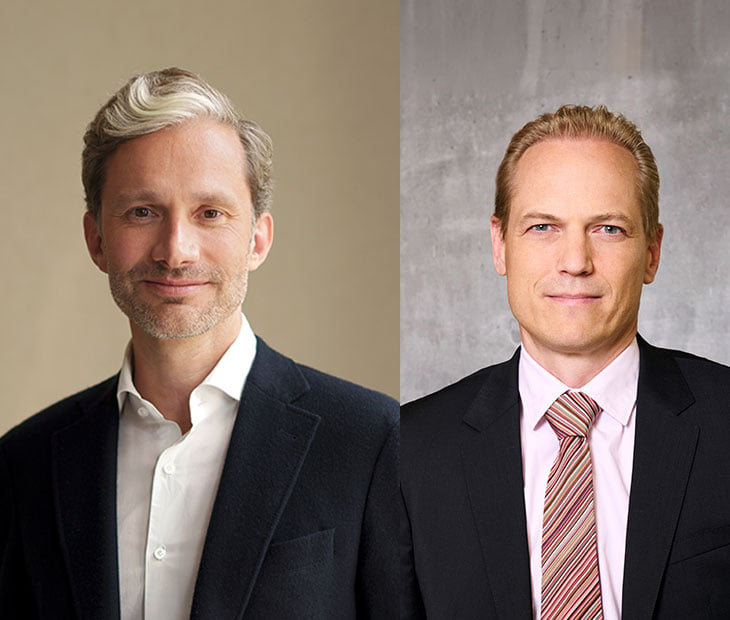
Günther Thallinger

Christopher Townsend
The situation

Figure 1: Rising global surface temperature for the period 1980–2019 compared to average temperature 1950–1979
The causes of this global warming are well understood. Greenhouse gas emissions, particularly carbon dioxide (CO₂) from fossil fuel combustion, have upset Earth’s delicate energy balance by trapping heat that would otherwise radiate into space. While natural carbon sinks like forests and oceans help absorb some emissions, their capacity to do so is diminishing due to deforestation, land degradation, and climate-driven disruptions.4
The results are, unfortunately, dramatic. More energy in the atmosphere accelerates the water cycle, leading to less frequent but more intense rainfall, prolonged droughts, and reduced soil moisture. This results in greater erosion, depleted nutrients, altered vegetation, lower crop yields, and less nutritious food. Stronger airflows drive more intense storms, while disturbances in the jet stream create extreme weather patterns, including heat and cold anomalies. Rising CO₂ levels in the atmosphere lead to greater CO₂ absorption by the oceans, causing acidification. This weakens coral reefs, dissolves the shells of marine organisms, and disrupts entire marine ecosystems, threatening biodiversity and global fisheries. The influx of freshwater from melting glaciers and ice caps disrupts ocean circulation patterns, such as the Atlantic Meridional Overturning Circulation. This slowing of currents alters global climate patterns, potentially bringing colder winters to Europe, stronger tropical storms, and further destabilization of weather systems.
In economic terms, extreme weather events driven by climate change are causing widespread destruction of assets—homes, infrastructure, and industries—leading to systemic market devaluation and financial instability. To provide context, since the early 2000s, about one-third of natural disaster losses has been insured. As insurers struggle to cover escalating risks, entire regions are becoming uninsurable, triggering a breakdown in credit markets, mortgage availability, and financial services.5 Governments may attempt to step in, but the rising costs of disaster relief are already straining public budgets beyond sustainability.6 Adaptation offers limited solutions, as some risks—such as extreme heat or megafires—simply exceed human tolerance or economic adaptability. At 3°C of warming, irreversible climate impacts lock in, rendering insurance unworkable, public intervention unaffordable, and financial stability unattainable.7
In social terms, climate change triggers cascading social crises, including mass displacement and food and water shortages. Entire regions of the world become uninhabitable, forcing millions into migration and reinforcing geopolitical conflicts. Declining agricultural yields and freshwater scarcity drive food insecurity, malnutrition, and social unrest, disproportionately affecting vulnerable populations. In the worst cases, social cohesion deteriorates, fuelling resource wars, deepening inequality, and eroding global governance, making coordinated responses nearly impossible.
What needs to be done

Figure 2: Strategies for climate mitigation
Even though a small number of countries are the main contributors to global emissions, it is essential for every nation to play a role in reducing emissions.8 The trajectory of carbon emissions differs considerably across nations. In 2024, the EU achieved a notable reduction in energy-related CO2 emissions, decreasing by 2.2 % compared to the previous year. Similarly, the United States saw a modest decline of 0.5 %. In contrast, China experienced a slight increase of 0.4 % in emissions, while India recorded the most significant rise among major economies, with an increase of 5.3 %.9 Industrialized countries bear a greater responsibility due to their historical emissions and should lead the transition, while supporting developing nations.
The biggest levers for corporate climate action lie with the largest corporations in particular in carbon intense industries. Indeed, a recent report shows that 36 companies are responsible for over half of global fossil fuel and cement CO2 emissions.10 It is these large corporations that shape global supply chains and can lead on the investments in green technology.
For many regions, transitioning to a low-carbon economy is not just a necessity but a major opportunity. China, for example, is investing heavily in renewable energy and electric vehicles, positioning itself as a global leader. The EU, however, faces an economic challenge—without rapid transformation, especially in energy, it risks losing its competitive edge. Embracing clean technologies and innovation will help regions secure long-term economic prosperity while mitigating climate risks.
Alongside mitigation measures, adaptation is the second crucial lever in addressing climate challenges. Imagine: You step outside, enjoying the warm, sunny weather, when you suddenly become aware of an approaching storm. You've been meaning to repair your back gate and invest in storm shutters but haven't got around to it yet. This situation highlights the importance of climate resilience in practice, as we face an increasing frequency of extreme weather events and may not be adequately prepared for their impacts.
On a broader economic and societal level, resilience planning is equally vital. A major storm can wreak havoc, destroying homes, crippling energy and transportation infrastructure, and devastating farmers by ruining their crops. Beyond the loss of homes, such events can lead to food scarcity, supply chain disruptions, and sanitary crises. Understanding the implications of various extreme weather events and identifying significant vulnerabilities is crucial. By assessing these scenarios, we can better prepare and adapt to them.
The increasing public and political awareness of climate impacts and risks has led to the incorporation of adaptation strategies in the climate policies and planning processes of most countries and numerous cities. Adaptation efforts can yield a range of additional benefits, including enhanced agricultural productivity, improving health and well-being, ensuring food security, supporting livelihoods, and conserving biodiversity, while also reducing risks and damages. The majority of adaptation measures focus on addressing water-related risks and impacts. For instance, in the case of inland flooding, a combination of structural measures such as dams and non-structural measures such as early warning systems can effectively minimize damages and loss of life. However, with global warming further accelerating, damages and losses will increase, and adaptation limits will be reached. Therefore, it is crucial that adaptation and mitigation efforts work in tandem to effectively address climate change.

How Allianz is contributing

Figure 3: Allianz Net-Zero Transition Plan (Read more)
Allianz also actively pursues insurance and investment opportunities to support solutions that address environmental and social challenges, and in particular, we are increasing our support for low-carbon solutions. Allianz offers a variety of insurance products to support low-carbon solutions and sustainability, and mitigate environmental risks. These include renewable energy insurance, which covers solar and wind energy projects; electric & hybrid vehicle insurance, which incentivizes the adoption of low-emission cars; environmental liability insurance to help businesses manage environmental risks; and green building coverage that supports sustainable reconstruction using eco-friendly materials. In 2024, sustainable (P&C) solutions generated nearly € 5 billion in revenue, including a revenue growth in low-carbon solutions of 25 % compared to the baseline in 2022, driven by expansion in onshore wind, solar, and battery manufacturing for electric vehicles. These initiatives reflect Allianz’s commitment to integrating sustainability into its insurance offerings as part of its focus on promoting a low-carbon economy.
In addition, Allianz's sustainable investments rose to over € 170 billion in 2024, including over € 43 billion allocated specifically to low-carbon solutions. Key investments include over 100 wind and solar farms worldwide, such as stakes in the Hollandse Kust Zuid offshore wind farm in the Netherlands and the He Dreiht offshore wind farm in Germany, which will supply clean energy to 1.1 million households. The company also invests in green hydrogen and ammonia projects to help decarbonize industries. Looking ahead, Allianz plans to continue investing in climate and cleantech solutions, reinforcing its commitment to accelerating the global transition to a low-carbon economy. The company's stewardship activities—led by Allianz Investment Management, Allianz Global Investors, and PIMCO—also expanded, with corporate engagements on sustainability, including climate change, reaching over 1,300 portfolio companies.
Achieving our net-zero commitment is contingent upon multilateral efforts with public policy and the real economy, as the necessary changes require widespread support. Our net-zero commitment and ability to implement decarbonization actions depend significantly on governments fulfilling the ambitious goals of the Paris Agreement through swift, stable, and reliable public policies, action plans, and regulations. This includes the need for adequate frameworks and market incentives to enable the transition of the global economy along 1.5°C pathways. The private sector needs to play an important role in supporting actions toward this transition. In pursuit of this, we actively engage with policymakers and regulators to support sustainable financing and achieve the goals outlined in the Paris Agreement.
Finally, Allianz has distinct capabilities to research and assess extreme weather events and climate change risks, as well as to provide financial solutions for global climate adaptation. Our expertise involves utilizing extensive loss data accumulated over decades and committing substantial capital to high-impact adaptation and resilience initiatives, e.g. supporting homeowners and business clients in assessing their risks with CAReS or GloRiA. One of the key objectives of our Sustainable Solutions framework is providing incentives for risk reduction, encouraging customers to protect themselves or their assets against the adverse effects of climate change, thereby driving a positive impact on climate change adaptation.
Conclusion
The urgency of addressing climate change and environmental degradation has never been clearer. Societies that are polarized, ecosystems that are collapsing, and erratic water cycles caused by increasing atmospheric temperature all contribute to a growing sense of risk. When we look at the state of the planet’s health, the situation becomes pressing. Risks to economies and societies escalate, creating a world where managing financial risk becomes increasingly difficult and, ultimately, impossible.
As a financial institution, Allianz recognizes that integrating sustainability into decision-making processes is no longer optional but essential. The health of the planet is intricately linked to the stability of the financial system, and non-sustainable societies and economies are inherently risky. The insurance sector’s ability to offer effective risk management and risk prevention services is contingent upon maintaining a stable and predictable environment. It is in the best interest of global insurers and investors, as well as the broader community, to help steer economies and societies toward sustainability to ensure that the financial system can function effectively and drive value in the long term.
Allianz’s commitment to sustainability is not solely about safeguarding short-term business interests, though it undeniably contributes to that. Through Allianz’s sustainability efforts, the company also takes responsibility in driving societal and economic transformation toward sustainability. By adhering to these principles, Allianz helps foster the long-term resilience of the financial ecosystem. In doing so, Allianz is not only positioning itself as a forward-thinking institution but also contributing to a global movement toward sustainability. This commitment ensures that Allianz is part of the solution—helping to create economies that are resilient to climate risks and fostering a healthier, more sustainable future for all.
2. UNFCC
3. Taylor & Francis
4. Royal Meteorological Society
5. Munich Re; Digital Insurance
6. Deutsche Welle; Al Arabiya; Allianz Research
7. IPCC, Reuters; Earth Observatory
8. Emissions Database for Global Atmospheric Research
9. IEA Global Energy Review 2025
10. CarbonMajors / InfluenceMap The CO2 emissions in the database accounted for 80.3 % of global fossil fuel and cement CO2 emissions in 2023
Related stories
.jpeg)


About Allianz
Last updated: September 23, 2026
The Allianz Group is one of the world’s leading insurers and asset managers, active in almost 70 countries and serving around 97 million private and corporate customers*. Our customers benefit from a broad range of personal and corporate insurance services, including property, life and health insurance, as well as assistance services, credit and global business insurance. Recognized for the seventh consecutive year as the number one global insurance brand in Interbrand’s Best Global Brands 2025 ranking, Allianz’s success is built on technology-enabled customer centricity – providing peace of mind, protection, and prevention for our customers and strengthening the resilience of individuals, communities, and societies. We are one of the world’s largest investors, managing around 791 billion euros** on behalf of our insurance customers. Furthermore, our asset managers PIMCO and Allianz Global Investors manage about 2.2 trillion euros** of third-party assets. Thanks to our systematic integration of environmental and social criteria in our business processes and investment decisions, Allianz received an MSCI ESG Rating of AAA (as of March 2026). In 2025, our 156,000 dedicated employees achieved a total business volume of 186.9 billion euros and an operating profit of 17.4 billion euros for our shareholders.
* As of December 31, 2025. Customer count reflects Allianz customers in consolidated entities that are part of the customer reporting scope only.
** As of June 30, 2026.