Trends in Sustainable investing: a PIMCO perspective

The recent U.N. Climate Conference (COP27) in Egypt helped advance initiatives important to sustainable investing, especially in the global energy transition. 

Active fixed income investors play a critical role in this transition. For insight into the sustainable investing megatrend, we caught up with our colleague Ryan Korinke, managing director and global head of sustainability at PIMCO, one of the world’s premier fixed income investment firms with $451B* in socially responsible and ESG Assets under management. 

In this video, Ryan shares his experience at COP27 and his views on the challenges and opportunities ahead for sustainable fixed income investors, including a focus on methane and the economic benefits of getting it under control.   

*Source:  https://www.pimco.com/en-us/investments/esg-investing

The figure includes 1) Third-party ESG AUM with (i) specified ESG-linked objectives (“ESG” portfolios); or (ii) a focus on a sustainability-related theme (“thematic portfolios”). 2) third party Socially Responsible AUM (negative screened portfolios), which consists of PIMCO-sponsored funds and separate accounts with more than one client-driven values-based exclusion (“socially responsible portfolios”); and 3) Allianz ESG and Socially Responsible AUM. Source: PIMCO. As of 9/30/2022 return to content.

The Allianz Group is one of the world’s leading insurers and asset managers, active in almost 70 countries and serving around 97 million private and corporate customers*. Allianz customers benefit from a broad range of personal and corporate insurance services, ranging from property, life and health insurance to assistance services to credit insurance and global business insurance. Allianz is one of the world’s largest investors, managing around 764 billion euros** on behalf of its insurance customers. Furthermore, our asset managers PIMCO and Allianz Global Investors manage about 2.0 trillion euros** of third-party assets. Thanks to our systematic integration of ecological and social criteria in our business processes and investment decisions, we are among the leaders in the insurance industry in the Dow Jones Sustainability Index. In 2025, over 156,000 employees achieved total business volume of 186.9 billion euros and an operating profit of 17.4 billion euros for the Group.

* Customer count reflects Allianz customers in consolidated entities that are part of the customer reporting scope only.

** As of December 31, 2025.

As with all content published on this site, these statements are subject to our cautionary note regarding forward-looking statements:

High time for bold climate action

Climate change is one of the defining risks of the 21st century. The climate conference COP26, which starts next week, might be one of the last chances to come to grips before the devastation and cost spiral out of control.

After the storm

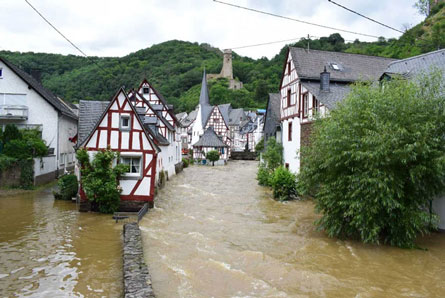
The flash flood caused by low-pressure weather system Bernd devastated parts of Germany, Belgium and the Netherlands. Three months after the disaster, the infrastructure in the flooded areas remains in shambles and people are struggling to cope with the aftermath. Unfortunately, this flood is just one in a series of natural disasters this year, highlighting the need to actively address climate change and find new ways to protect citizens.

The climate is changing. Why aren’t sovereign wealth funds?

In this editorial for allianz.com, Allianz board member Günther Thallinger calls on sovereign wealth funds (SWFs) to use their significant financial influence to effect climate policy. He writes that it makes ethical and financial sense for SWFs to go green, as the world can no longer afford for them to sit on the sidelines as the world tackles climate change.