
The following Interview was published in the German publication Die Zeit on August 10, 2026. It has been republished here with permission from Die Zeit.

We are thinking too narrowly about solutions
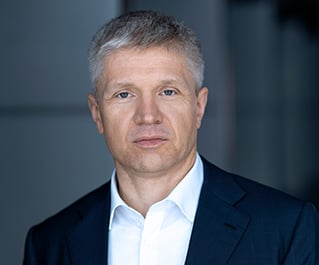
Günther Thallinger
Günther Thallinger, 54, is a member of the Board of Management of Allianz SE. Until the end of the year, he is responsible for Investments, Sustainability, and Health Insurance. He also chairs the insurance group's Sustainability Board.
DIE ZEIT: Günther Thallinger, what has been on your mind lately?
Günther Thallinger: I keep coming back to one question: Can we remain economically competitive without sustainability? Or, more broadly: Can we continue to ensure prosperity without sustainability? Especially from a global perspective, maintaining a minimum level of prosperity, and therefore economic success, must be the goal.
At the same time, we must not exceed ecological limits. Right now, however, we are failing to provide that minimum level of prosperity for many people, and we are exceeding six of the nine planetary boundaries.
ZEIT: This last point is becoming alarmingly clear during this summer of extreme heat. Many regions of Europe are experiencing heavy rainfall and severe hailstorms, while wildfires have raged for weeks in parts of Spain, France, and Greece. Harvests are shrinking, and low river levels are disrupting economic activity. What goes through the mind of an insurance executive when seeing these developments?
Thallinger: First and foremost, I ask myself how we can help the people affected. From a professional standpoint, I am also interested in how these risks may evolve in the future and what factors are driving them.
ZEIT: What does that mean in practical terms?
Thallinger: As insurers, we must be transparent about where the risks associated with global warming are particularly high. That allows people to protect themselves more effectively. Thanks to improved prevention and firefighting capabilities, many fires can now be contained more quickly. At the same time, current data show that wildfire losses over the past ten years have been significantly higher than during the preceding decade.
Large parts of the world, including Europe, will continue to face substantial wildfire risks. That is why, in addition to focusing on prevention, we must also offer new insurance products and risk management services.
ZEIT: Will farms, homes, roads, businesses, ports, and other assets still be insurable in the future?
Thallinger: If we adapt to these risks better, insurability can be maintained at appropriate price levels. However, if the overall volume of risk continues to increase, we will eventually reach limits.
Insurability depends on the ability to diversify and balance risks across different protection mechanisms and geographic regions. But if the impacts of climate change increasingly affect more areas of life, more regions, and more industries, that ability erodes. At that point, we face a systemic risk to society, and insurability becomes much more difficult.
ZEIT: You have warned before that if insurance becomes unaffordable in more and more regions, it could destabilize the financial sector and ultimately the broader economic system. Insurers have already raised premiums for customers who face elevated risks from droughts or flooding, and in Spain, banks have followed suit by increasing lending rates. Does this summer show that human-caused climate change is already undermining our economic system?
Thallinger: No, not the entire economic system, but parts of it certainly are being affected, and at some point, the system as a whole may be challenged. That is exactly what I mean when I talk about the relationship between competitiveness, prosperity, and sustainability.
The Intergovernmental Panel on Climate Change communicates very clearly that climate change is accelerating and that extreme weather events will therefore become more frequent. If we fail to reverse this trend, the challenge will continue to grow and eventually exceed our capacity to manage it.
This makes it even more important that we intensify our efforts to drastically reduce greenhouse gas emissions and adapt to emerging risks.
"We ignore information and thereby narrow our perspective."
- Günther Thallinger
ZEIT: In European politics, and in Germany in particular, the current trend seems to be moving in the opposite direction. Fossil energy sources are being granted longer transition periods, and some governments are openly saying that the economy must first regain momentum before sustainability can again become a priority. Does that concern you?
Thallinger: The problem is that we are thinking too narrowly about solutions. This affects three dimensions. The first is time. Governments think in four-year electoral cycles, and many companies only plan three years ahead. Such short time horizons prevent us from incorporating the long-term effects of our economic activities on ecological and social systems into our decision-making.
ZEIT: What are the other dimensions?
Thallinger: Secondly, we ignore information and thereby narrow our perspective. In Europe, sustainability reporting has become a public disclosure requirement for many companies, but not all.
In other parts of the world, reporting obligations remain focused solely on financial data. This distortion can lead to underestimating risks to soils or water systems, which are resources that underpin the production processes of many companies.
As a result, important investments may never be made. Third, there is a lack of responsibility. We are dealing with problems that have regional, international, and even global implications. Yet political responsibility rests with municipalities, regions, and nation states, while corporate responsibility remains within individual companies. All of this shows that we need to significantly expand the solution framework across all three dimensions: time, information, and responsibility.
ZEIT: How can that be achieved?
Thallinger: Companies should develop long-term transformation plans, and in politics, long-term visions are essential. What should our energy market look like in 2035? What about transportation? Water infrastructure and water management systems?
These long-term plans allow us to use the full range of available information. For example, only when carbon pricing is fully reflected in capital markets can lending and investment decisions be optimized toward climate-friendly outcomes. That is why it is so important that the European emissions trading system remains ambitious.
ZEIT: Insurers do more than sell policies. They also manage and invest enormous amounts of customer assets. How is Allianz expanding its solution space?
Thallinger: We are working very concretely on economic transformation through a variety of platforms. One example is the Net-Zero Asset Owner Alliance, which was convened by the United Nations in 2019. Today, about 85 institutional investors have joined the initiative.
They have set clear climate targets and engage constructively with the companies in which they invest, helping them align with the Paris Agreement goal of reaching net-zero emissions by 2050.
These companies must demonstrate their progress through transformation plans and implementation measures. We, too, have a transformation plan with interim targets through 2030, and we report on it annually. In addition, our sustainability disclosures in the annual report are externally verified at the highest level of certification. Expanding the solution framework in this way ultimately helps build trust.
Anyone can see from the outside: Are they actually doing what they say?
"Climate protection follows from competitiveness."
ZEIT: That makes it seem even more problematic that, in the name of reducing bureaucracy, the EU and the German government are currently weakening sustainability reporting requirements and rolling back certain environmental requirements in agriculture. Once again: Does this apparent rollback in climate policy concern you?
Thallinger: It is not happening everywhere. The political landscape is highly diverse. The United Kingdom and Spain, for example, recently stated jointly that the climate emergency is also a security emergency. China, Texas, and California are making solar energy, wind power, battery storage, and intelligent energy management central pillars of economic development.
India is moving aggressively into renewable infrastructure and may avoid building the fossil-based infrastructure that remains a legacy burden elsewhere. That, in itself, is a unique competitive advantage. Every major economic region is trying to build the infrastructure of the 21st century because that is what defines competitiveness. Climate protection follows from competitiveness.
Europe, and Germany in particular, need to embrace this development much more decisively. But yes, some political actors are still operating within a limited window.
ZEIT: Does the same apply to the financial sector? For a time, banks were viewed as drivers of the ecological transition, for example by announcing that they would withdraw investments from fossil fuel industries. We do not hear much about that anymore.
Thallinger: The picture there is also mixed. The Net-Zero Asset Owner Alliance, for example, remains fully committed. It now influences assets worth more than $9 trillion, and in 2024 the financed emissions of its signatories declined by an average of 6 percent. But it is true that some companies have become less ambitious about their targets.
ZEIT: What percentage of Allianz's investments are climate-friendly, and how much still flows into oil-based industries?
Thallinger: We do not see this as an either-or question. While we are increasingly investing in climate solutions and transformation opportunities, we also support companies on their decarbonization journeys as a long-term investor.
At the same time, one should not expect capital markets to solve major problems that, from their perspective, do not yet exist. Governments must make other risks, just like carbon emissions, visible as market factors if they are to be addressed effectively.
"Biodiversity is a major challenge because, unfortunately, it cannot be measured and quantified as easily as greenhouse gas emissions."
- Günther Thallinger
ZEIT: Many people see exactly this problem when it comes to biodiversity loss, which is just as critical for the planet as climate change. How can biodiversity become a market factor and therefore a criterion for investment decisions?
Thallinger: Biodiversity is a major challenge because, unfortunately, it cannot be measured and quantified as easily as greenhouse gas emissions.
Yet that kind of quantification is necessary if it is to influence business decisions. I realize this is not an especially inspiring answer, but that is also why we do not yet have programs comparable to those developed for climate protection.
ZEIT: Is the difficulty of measuring biodiversity also being used as an excuse and a delaying tactic? After all, we already know which land management practices are beneficial for species protection, landscapes, and waterways.
Thallinger: It is true that many measures can be implemented immediately, and we are active in this area. A forest is less likely to burn when diverse vegetation helps retain moisture and provide cooling.
The same applies to soils and groundwater recharge. Climate policy already addresses some of these issues indirectly. In cooler summers, forests and soils do not dry out as quickly, strengthening their role as natural carbon sinks.
And if we expand the solution framework by recording ecosystem services through something like a natural capital inventory, we can better understand the system-wide relationships, discuss them openly, and begin steering them more effectively.
ZEIT: Most institutions, including government ministries, tend to operate within the confines of their specific subject areas rather than focusing on the broader interconnections. How can systems thinking be developed?
Thallinger: Society must demand it. Those in positions of responsibility need to join forces through larger initiatives so that they can take on greater responsibility together.
ZEIT: After ten years, your tenure on the Allianz Board is coming to an end. Given the many political setbacks, do you look back with frustration? Or are there still reasons for optimism?
Thallinger: In major transformation processes, not all stakeholders move at the same pace. But much is moving in the right direction. Financial service providers are now contributing to economic transformation. Sustainability has become integrated into decision-making processes at many companies.
Targets for 2030 have been communicated. Technical capabilities, our understanding of the challenges, and our willingness to act have all increased significantly. That gives me hope.
ZEIT: Hope despite Trump and the new geopolitical environment?
Thallinger: Yes. Economic transformation and competitiveness are long-term issues. Sustainability is becoming increasingly intertwined with both. Some of the other developments may prove to be much shorter-term.
Further information
More news

About Allianz
Last updated: September 23, 2026
The Allianz Group is one of the world’s leading insurers and asset managers, active in almost 70 countries and serving around 97 million private and corporate customers*. Our customers benefit from a broad range of personal and corporate insurance services, including property, life and health insurance, as well as assistance services, credit and global business insurance. Recognized for the seventh consecutive year as the number one global insurance brand in Interbrand’s Best Global Brands 2025 ranking, Allianz’s success is built on technology-enabled customer centricity – providing peace of mind, protection, and prevention for our customers and strengthening the resilience of individuals, communities, and societies. We are one of the world’s largest investors, managing around 791 billion euros** on behalf of our insurance customers. Furthermore, our asset managers PIMCO and Allianz Global Investors manage about 2.2 trillion euros** of third-party assets. Thanks to our systematic integration of environmental and social criteria in our business processes and investment decisions, Allianz received an MSCI ESG Rating of AAA (as of March 2026). In 2025, our 156,000 dedicated employees achieved a total business volume of 186.9 billion euros and an operating profit of 17.4 billion euros for our shareholders.
* As of December 31, 2025. Customer count reflects Allianz customers in consolidated entities that are part of the customer reporting scope only.
** As of June 30, 2026.
Cautionary note regarding forward-looking statements
As with all content published on this site, these statements are subject to our cautionary note regarding forward-looking statements: